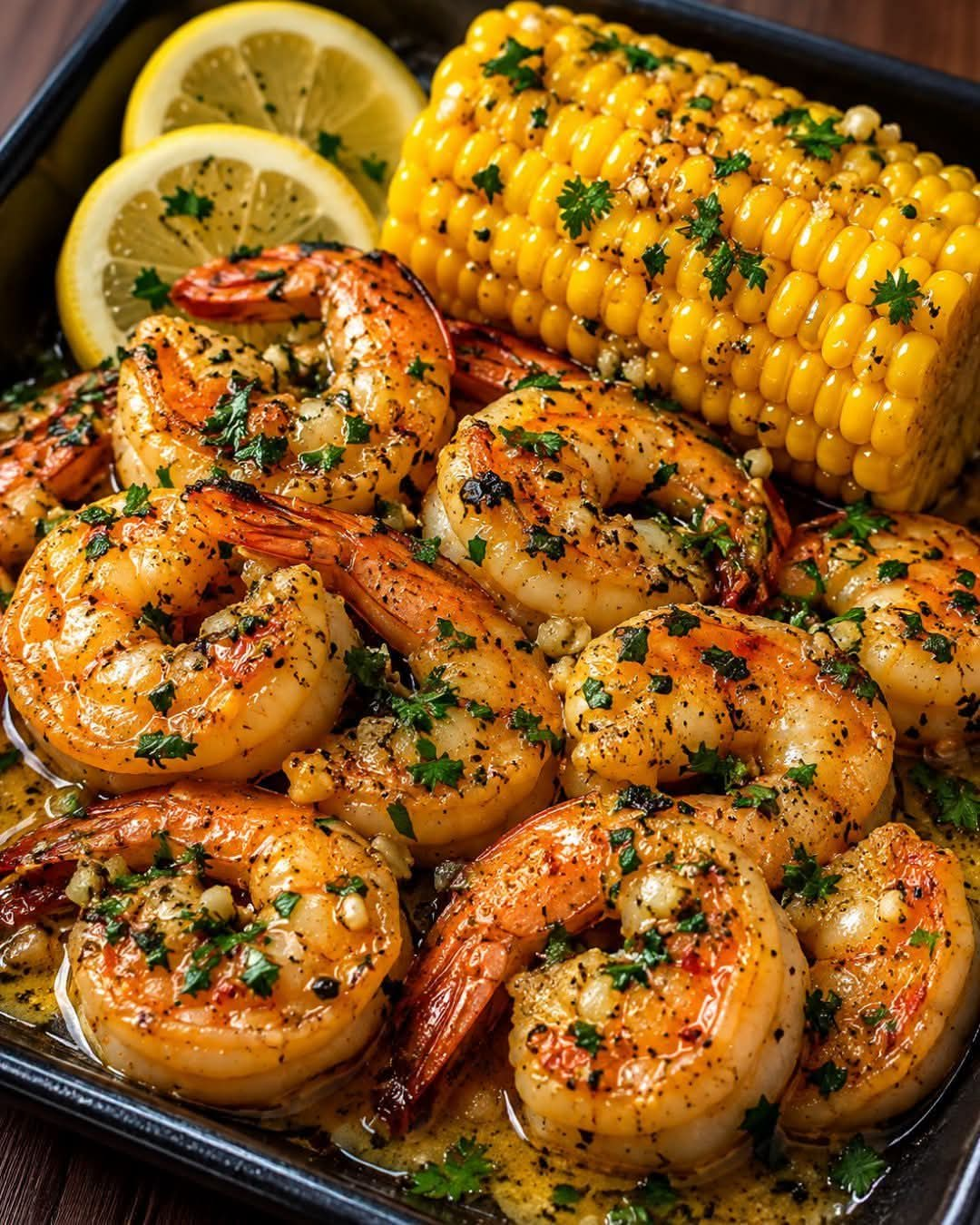
A Delicious Oven-Baked Seafood Feast with Garlic, Butter, Lemon, and Fresh Herbs
1. Introduction
If you love juicy seafood packed with rich garlic butter flavor, this Garlic Butter Baked Shrimp Seafood Tray is a recipe you absolutely need to try! 🍤🧄 With tender shrimp, melted butter, fresh garlic, zesty lemon, and a delicious blend of herbs and spices, every bite is full of irresistible flavor.
This easy oven-baked seafood dish is perfect for family dinners, weekend gatherings, special occasions, or whenever you want to enjoy restaurant-style seafood at home. The garlic butter sauce coats the shrimp beautifully, keeping them moist, flavorful, and delicious.
The best part? You don’t need complicated cooking techniques or expensive restaurant ingredients. Everything comes together in one baking tray, making preparation simple and cleanup easy.
Serve this seafood tray with roasted potatoes, steamed rice, crusty bread, or your favorite vegetables for a complete and satisfying meal.
2. Recipe Information
- Recipe Name: Juicy Garlic Butter Baked Shrimp Seafood Tray
- Cuisine: Seafood-inspired home cooking
- Preparation Time: 15 minutes
- Cooking Time: 10–15 minutes
- Total Time: Approximately 30 minutes
- Servings: 4 people
- Cooking Method: Oven-baking
- Difficulty Level: Easy
- Main Ingredient: Shrimp
- Flavor Profile: Garlicky, buttery, lemony, savory, and slightly spicy
3. Ingredients
For the Seafood Tray
- 900 g (2 pounds) large shrimp, peeled and deveined
- 100 g (7 tablespoons) unsalted butter, melted
- 6–8 garlic cloves, finely minced
- 2 tablespoons olive oil
- 2 tablespoons fresh lemon juice
- 1 teaspoon lemon zest
- 1 teaspoon paprika
- ½ teaspoon onion powder
- ½ teaspoon dried oregano
- ½ teaspoon dried thyme
- ¼–½ teaspoon red pepper flakes, optional
- Salt, to taste
- Black pepper, to taste
- 2 tablespoons chopped fresh parsley
- Lemon wedges, for serving
Optional Seafood Additions
For a larger seafood feast, you can also add:
- 250 g mussels, cleaned and prepared
- 250 g scallops
- 250 g cooked crab legs
- 1 small onion, sliced
- 1 red bell pepper, sliced
- 300 g baby potatoes, partially boiled
Important: Different seafood ingredients require different cooking times. Add delicate shrimp toward the end of cooking when preparing a mixed seafood tray, and cook all seafood until it reaches a safe temperature.
Optional Garlic Butter Finishing Sauce
- 2 tablespoons melted butter
- 1 garlic clove, finely minced and cooked briefly
- 1 tablespoon lemon juice
- 1 tablespoon chopped parsley
Mix these ingredients together and drizzle over the cooked shrimp just before serving.
4. Instructions
Step 1: Preheat the Oven
Preheat your oven to 200°C (400°F). Prepare a large baking tray by lightly greasing it with olive oil or lining it with foil or baking parchment suitable for the oven.
Step 2: Prepare the Shrimp
If using frozen shrimp, thaw them completely in the refrigerator or under cold running water in a sealed bag. Drain and pat them dry with paper towels.
Place the shrimp in a large mixing bowl. Removing excess moisture helps the butter sauce cling to the shrimp and prevents the tray from becoming watery.
Step 3: Make the Garlic Butter Sauce
In a separate bowl, combine the melted butter, olive oil, minced garlic, lemon juice, lemon zest, paprika, onion powder, oregano, thyme, salt, black pepper, and optional red pepper flakes.
Whisk everything together until the garlic and seasonings are evenly distributed throughout the butter.
The sauce should smell fragrant, fresh, and rich.
Step 4: Coat the Shrimp
Pour the garlic butter mixture over the prepared shrimp.
Toss gently until every shrimp is coated in the buttery seasoning. Allow the shrimp to sit for about 5–10 minutes while the oven finishes heating.
Avoid leaving raw seafood at room temperature for an extended period.
Step 5: Arrange the Baking Tray
Spread the shrimp in a single layer on the prepared baking tray. Avoid overcrowding the pan because the shrimp will cook more evenly when they have enough space.
If adding partially cooked potatoes or vegetables, arrange them around the shrimp. Keep in mind that potatoes need more cooking time than shrimp.
Pour any remaining garlic butter sauce over the ingredients.
Step 6: Bake the Shrimp
Place the tray in the preheated oven and bake for approximately 8–12 minutes, depending on the size of the shrimp.
Larger shrimp may need a few additional minutes. Turn them halfway through cooking if necessary.
The shrimp are ready when they are opaque throughout, pearly white inside, and curled into a loose C shape. For food safety, cook shrimp to an internal temperature of 63°C (145°F).
Avoid overcooking because shrimp can quickly become tough and rubbery.
Step 7: Add the Finishing Touches
Remove the tray from the oven and sprinkle fresh chopped parsley over the shrimp.
Drizzle with the optional garlic butter finishing sauce and squeeze fresh lemon juice over the top.
Let the dish rest for 1–2 minutes before serving.
Step 8: Serve and Enjoy
Bring the tray directly to the table for a beautiful seafood presentation. Serve while hot, with lemon wedges and your favorite side dishes.
Don’t forget some crusty bread to soak up every drop of that delicious garlic butter sauce!
5. Preparation Methods and Cooking Tips
Method One: Classic Oven-Baked Shrimp
This is the easiest method and the one recommended for beginners. Toss the shrimp in the garlic butter mixture, spread them on a tray, and bake until just cooked.
It creates tender shrimp with a rich buttery coating and minimal cleanup.
Method Two: Garlic Butter Shrimp with Potatoes
For a more filling meal, add baby potatoes.
Cut the potatoes into small, even pieces, season them with olive oil, salt, pepper, and paprika, then roast them for about 20–25 minutes before adding the shrimp.
Add the seasoned shrimp and continue baking until the shrimp are cooked through.
Method Three: Spicy Garlic Butter Shrimp
If you enjoy bold flavors, add extra red pepper flakes, a pinch of cayenne pepper, or a little chili powder to the butter sauce.
Balance the heat with fresh lemon juice and parsley for a spicy, tangy seafood dish.
Method Four: Lemon Herb Shrimp
For a fresher flavor, increase the lemon zest and add fresh thyme or chopped parsley. You can also use a small amount of fresh rosemary, but use it sparingly because its flavor is strong.
Tips for Perfect Results
- Use large shrimp for a juicy, satisfying texture.
- Pat the shrimp dry before adding the sauce.
- Use freshly minced garlic for the best flavor.
- Spread the shrimp in one layer rather than piling them up.
- Watch the cooking time carefully to prevent overcooking.
- Add fresh lemon juice at the end to brighten the flavor.
- Use unsalted butter so you can control the salt level.
- If using precooked shrimp, heat them only briefly; prolonged baking can make them tough.
- If using frozen seafood, thaw and drain it properly before baking.
6. The History of Garlic Butter Shrimp
Shrimp has been enjoyed in coastal communities around the world for generations. Seafood has long been an important source of protein in regions where fishing is a major part of daily life.
Garlic, butter, herbs, and lemon are ingredients frequently used in European and Mediterranean-inspired seafood cooking. Garlic butter shrimp became especially popular in restaurants because it combines simple ingredients with rich, appealing flavors.
Many variations of shrimp with garlic and butter can be found in different culinary traditions. Spanish-style garlic shrimp, often called gambas al ajillo, is typically cooked in olive oil with garlic and chili rather than being baked in a butter sauce. Italian-American shrimp scampi also combines shrimp with garlic, butter, lemon, and sometimes white wine.
This oven-baked seafood tray is a modern, convenient variation inspired by these familiar flavor combinations. Instead of preparing everything in a skillet, the oven does most of the work, making it ideal for home cooks who want an easy seafood dinner.
7. Nutritional Benefits
Shrimp can be a nutritious addition to a balanced diet. Its nutritional value depends on the portion size, ingredients, and preparation method.
Protein for the Body
Shrimp provides high-quality protein, which helps the body maintain and repair muscles and other tissues.
Naturally Low in Carbohydrates
Plain shrimp contains very little carbohydrate. This recipe can fit into a lower-carbohydrate eating pattern, although the total carbohydrate content will increase if you serve it with potatoes, bread, or rice.
Vitamins and Minerals
Shrimp provides several nutrients, including vitamin B12, selenium, iodine, and phosphorus. These nutrients support normal body functions, including energy metabolism and thyroid function.
Garlic and Herbs
Garlic, parsley, oregano, and thyme add flavor without requiring large quantities of extra salt. Garlic also contains naturally occurring sulfur compounds.
Lemon Juice
Lemon adds a fresh, tangy flavor and provides a small amount of vitamin C. It helps balance the richness of the butter.
Healthy Eating Considerations
Butter adds saturated fat, while olive oil provides predominantly unsaturated fat. To make the meal lighter, reduce the butter slightly and increase the lemon juice, herbs, and vegetables.
Shrimp also contains cholesterol and can be high in sodium depending on how it is processed or seasoned. People with shellfish allergies should avoid this recipe.
Remember: This dish is a delicious meal, not a medical treatment. Its benefits depend on your overall eating pattern and portion size.
8. Approximate Nutritional Information
Estimated values per serving, assuming four servings and the main ingredients only:
- Calories: 350–420 kcal
- Protein: 40–45 g
- Fat: 20–25 g
- Carbohydrates: 2–5 g
- Fiber: Less than 1 g
These figures are approximate and will vary according to the shrimp size, amount of butter consumed, and exact ingredients used. Additional potatoes, bread, or other seafood will change the nutritional values.
9. Formation and Presentation Ideas
Presentation makes this dish even more appealing, especially when serving guests or sharing a food photograph online.
Rustic Seafood Tray
Arrange the shrimp in a large shallow baking dish. Add lemon wedges around the edges, sprinkle with fresh parsley, and let the golden garlic butter sauce shine.
Family-Style Dinner
Serve the shrimp in the center of the table with bowls of rice, roasted potatoes, and a fresh green salad. Everyone can help themselves.
Restaurant-Style Plate
Place the shrimp over a bed of rice or pasta. Spoon the garlic butter sauce over the top, then garnish with parsley and a thin lemon slice.
Festive Seafood Feast
Combine shrimp with crab legs, mussels, corn, and potatoes for a seafood-boil-inspired presentation. Cook each ingredient appropriately before combining them, since they do not all require the same cooking time.
10. What to Serve with Garlic Butter Shrimp
This recipe pairs wonderfully with many side dishes.
Potato dishes
- Roasted baby potatoes
- Crispy oven fries
- Mashed potatoes
- Garlic roasted potatoes
Rice and pasta
- Steamed white rice
- Lemon herb rice
- Buttered spaghetti
- Creamy Parmesan pasta
Vegetables
- Roasted broccoli
- Steamed green beans
- Grilled zucchini
- Roasted asparagus
Bread and salads
- Crusty French bread
- Garlic bread
- Fresh garden salad
- Cucumber and tomato salad
For a simple, balanced dinner, serve the shrimp with rice and steamed vegetables. For a special weekend meal, pair it with roasted potatoes, garlic bread, and a fresh salad.
11. Storage and Reheating
Refrigeration
Allow leftovers to cool promptly and place them in an airtight container in the refrigerator within two hours of cooking, or within one hour if the surrounding temperature is above 32°C (90°F).
Consume refrigerated leftovers within 3–4 days.
Freezing
For the best texture, enjoy the shrimp freshly cooked. If necessary, freeze cooked shrimp in a suitable airtight container for up to 2–3 months for best quality.
Thaw frozen leftovers in the refrigerator and reheat them thoroughly.
Reheating
Reheat gently in a covered skillet over low heat with a small splash of water or a little butter. You can also use a covered oven-safe dish at 160°C (325°F).
Heat leftovers to 74°C (165°F). Avoid reheating repeatedly because shrimp can become dry and rubbery.
Can You Prepare It Ahead?
You can prepare the garlic butter mixture a day in advance and refrigerate it. Clean and prepare the shrimp shortly before cooking, or keep them refrigerated in a separate sealed container until ready to use.
12. Frequently Asked Questions
Can I use frozen shrimp?
Yes. Thaw them completely, drain well, and pat dry before seasoning.
Can I use shrimp with the shells on?
Yes. Shell-on shrimp can be baked with garlic butter. They may take slightly longer to cook, and diners will need to peel them while eating.
Can I make this recipe without butter?
Yes. Replace the butter with olive oil for a lighter, dairy-free variation, and check that all other ingredients are dairy-free.
Why did my shrimp turn rubbery?
Shrimp cook quickly. Leaving them in the oven too long is the most common reason for a tough texture.
Can I add cheese?
You can sprinkle a little grated Parmesan over the shrimp near the end of cooking. However, cheese is optional and changes the flavor of the classic garlic butter sauce.
Can I prepare the recipe without lemon?
Yes, but lemon balances the richness of the butter. You can use a little extra parsley and a splash of another suitable mild acid, such as vinegar, if desired.
Is this recipe suitable for a dinner party?
Absolutely. You can prepare the sauce ahead of time, arrange the ingredients on a tray, and bake the shrimp shortly before serving.
13. Conclusion
Juicy Garlic Butter Baked Shrimp Seafood Tray is a wonderful example of how simple ingredients can create a delicious and memorable meal. Tender shrimp, fragrant garlic, rich butter, fresh lemon, and aromatic herbs come together to create a seafood dish that feels special without requiring complicated preparation.
Whether you serve it with rice, roasted potatoes, pasta, or crusty bread, this recipe is easy to customize for your family’s preferences. You can keep it classic, make it spicy, or add other seafood for a more festive presentation.
The secret to success is simple: use fresh-tasting ingredients, season generously but thoughtfully, and avoid overcooking the shrimp.
Make it for your next family dinner, share it with friends, and enjoy every buttery, garlicky bite!