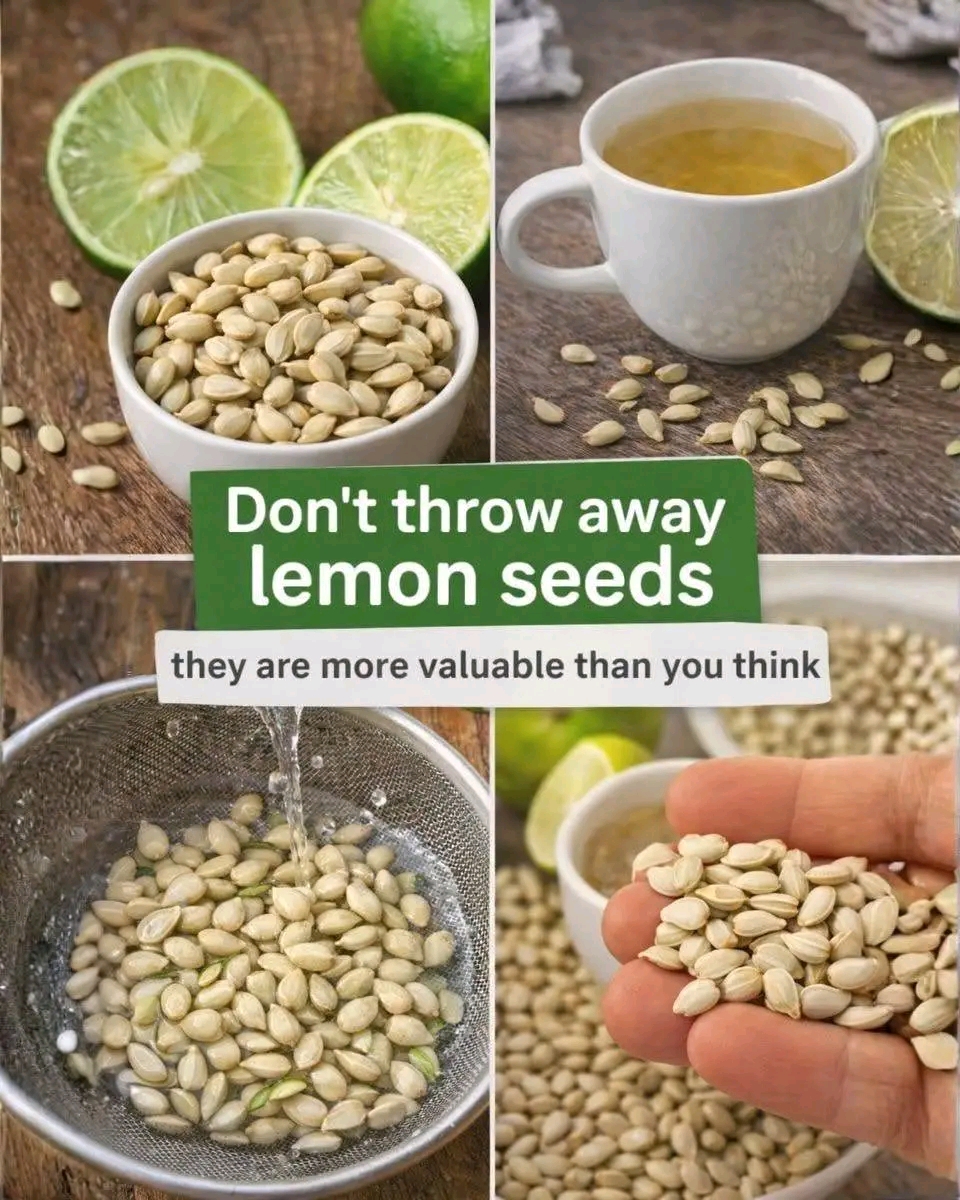
A Complete Guide to Lemon Seeds, Their Uses, Benefits, and a Simple Homemade Recipe
Introduction
Have you ever squeezed a fresh lemon, removed the seeds, and thrown them straight into the trash? 🍋 You may be surprised to learn that lemon seeds contain small amounts of plant compounds and can be reused in a few practical ways around the home.
Lemons are well known for their refreshing aroma, tangy flavor, and vitamin C content. While most people focus on the juice, pulp, and zest, the seeds are often overlooked. Although lemon seeds are not a miracle ingredient, they can be useful for simple household projects, including growing a lemon plant or experimenting with homemade citrus infusions.
In this guide, you will discover what lemon seeds contain, their potential benefits, how to prepare them for practical use, and a simple lemon-seed project you can try at home.
Important: Lemon seeds are not a proven treatment for any disease, and swallowing them does not provide special health benefits. Their usefulness depends on how they are handled and used.
Recipe and Preparation Information
- Recipe name: Homemade Lemon Seed Citrus Infusion
- Preparation time: 5 minutes
- Infusion time: 10–15 minutes
- Total time: Approximately 20 minutes
- Servings: 1 cup
- Difficulty: Easy
- Main ingredients: Fresh lemon seeds, water, and optional lemon juice
- Best use: A mild citrus-inspired drink experiment
This is a household recipe idea, not a medically validated remedy. Lemon seeds have a bitter taste, so using the lemon juice and zest is generally preferable when preparing a flavorful drink.
Ingredients
For one cup, you will need:
- 1 fresh, washed lemon
- 1 cup (240 ml) hot water
- 1 teaspoon fresh lemon juice, optional
- 1 teaspoon honey, optional
- A small strip of lemon zest, optional
- A fine-mesh strainer
Note: The lemon seeds are included for experimentation rather than as a recommended nutritional supplement. Do not grind them into a powder or consume them in large quantities.
Instructions
Step 1: Wash the Lemon
Wash the lemon thoroughly under running water before cutting it. This helps remove dirt and surface residues.
Step 2: Collect the Seeds
Cut the lemon in half and squeeze out the juice. Remove the seeds and rinse them with clean water.
Step 3: Prepare the Infusion
Place the seeds in a cup or heat-safe container. Pour hot water over them and allow the mixture to stand for 10–15 minutes.
Step 4: Strain Carefully
Pass the liquid through a fine-mesh strainer to remove every seed. Never swallow the seeds intentionally as part of the drink.
Step 5: Add Flavor
If desired, add a little fresh lemon juice, a strip of lemon zest, or honey. These ingredients provide the familiar citrus flavor that the seeds themselves do not offer.
Step 6: Serve
Enjoy the drink warm if you like. For a more flavorful and straightforward alternative, prepare lemon water using fresh lemon juice and skip the seeds entirely.
Preparation Methods: Other Ways to Use Lemon Seeds
Lemon seeds can be explored in several practical ways without treating them as medicine.
Method 1: Grow a Lemon Plant
- Collect seeds from a fresh lemon.
- Rinse away the remaining pulp.
- Plant the seeds about 1–2 cm deep in moist potting soil.
- Keep the pot in a warm place with indirect sunlight.
- Maintain moisture without waterlogging the soil.
- Once a seedling emerges, provide plenty of light.
Germination time varies, and not every seed will sprout. A lemon tree grown from seed may take several years to flower and fruit, and the fruit may differ from that of the parent tree.
Method 2: Make a Citrus-Scented Household Project
- Rinse the seeds and remove all pulp.
- Allow them to dry completely.
- Use them as part of a decorative craft or seed-growing experiment.
- Keep them away from small children and pets who might swallow them.
Do not assume that lemon seeds will produce a powerful cleaning product or disinfectant. For household cleaning, use an appropriate cleaner designed for the surface.
Method 3: Use the Lemon Itself for Cooking
If your goal is to make use of every part of the fruit, the zest and juice are more practical than the seeds. Add lemon zest to cakes, biscuits, marinades, salad dressings, and sauces. Freeze leftover juice in small portions for later use.
The History of Lemons and Their Seeds
Lemons have a long history of cultivation and trade. Citrus fruits originated in Asia, and lemons spread through trade and agricultural exchange into the Mediterranean region. Over time, they became important ingredients in cooking, traditional household practices, and gardening.
Before modern refrigeration and the widespread availability of packaged products, people often looked for different ways to make use of fruits and other household materials. Citrus peels were valued for their aroma, juices were used in food preparation, and seeds could be saved for planting.
Today, growing citrus plants from seeds remains a popular home-gardening activity. It offers an inexpensive way to explore plant growth and learn about the life cycle of fruit trees.
However, historical use should not be confused with scientific proof that lemon seeds can treat illnesses.
Potential Benefits of Lemon Seeds
Lemon seeds are sometimes described online as a hidden health treasure. It is important to separate what is biologically plausible from what has actually been demonstrated in people.
1. They Can Be Used for Gardening
One practical benefit is their potential to grow into lemon seedlings. This can be an enjoyable, low-cost gardening project for people who like growing plants at home.
2. They Contain Plant Compounds
Like other parts of plants, citrus seeds contain various natural compounds. Scientists can study these compounds in laboratory settings, but laboratory findings do not automatically mean that eating the seeds provides a health benefit.
3. They Encourage Less Waste
Saving seeds for planting can help people make more use of the fruits they purchase. It is a simple way to explore gardening rather than throwing every seed away.
4. They Can Support Learning
Planting lemon seeds provides an easy introduction to germination, root development, watering, soil care, and sunlight requirements.
5. They Encourage Curiosity About Food
Learning about the different parts of a lemon can help people make informed decisions about food preparation and avoid believing exaggerated health claims.
Nutritional Information
Lemon seeds are not commonly eaten as food, so reliable standard serving sizes and established nutritional values are limited.
For comparison, lemon juice is a recognized source of vitamin C, although the amount varies with the lemon’s size and how much juice is used. Lemon zest also contributes aromatic compounds and small amounts of nutrients.
There is insufficient clinical evidence to assign lemon seeds a special nutritional benefit or recommend them as a supplement.
If your goal is to increase vitamin C intake, consider established food sources such as citrus juice, oranges, kiwi, strawberries, bell peppers, and broccoli.
Safety Precautions
Although accidentally swallowing an occasional whole lemon seed is generally unlikely to cause harm in a healthy adult, it is not advisable to deliberately eat large amounts or grind the seeds for consumption.
Keep the following points in mind:
- Do not rely on lemon seeds as medicine. They have not been established as a treatment for digestive problems, infections, cancer, or other diseases.
- Avoid excessive consumption. The seeds are not a conventional food ingredient, and their safety in concentrated preparations has not been well established.
- Be careful with choking hazards. Keep loose seeds away from young children.
- Do not confuse laboratory research with human evidence. A compound that shows activity in a laboratory is not necessarily effective or safe when consumed.
- Seek appropriate medical care. Persistent symptoms should be assessed by a qualified healthcare professional rather than treated with homemade seed preparations.
Tips for Getting the Most from Your Lemons
- Choose lemons that feel firm and heavy for their size.
- Wash the peel before zesting or cutting the fruit.
- Store whole lemons in the refrigerator to help them stay fresh longer.
- Freeze leftover juice in ice-cube trays.
- Freeze zest in small portions for baking and cooking.
- Save healthy seeds for a gardening experiment.
- Avoid making health claims about homemade infusions without reliable evidence.
Frequently Asked Questions
Can lemon seeds detox the body?
There is no good clinical evidence that lemon seeds detoxify the body. The liver and kidneys already perform essential waste-processing functions.
Can lemon seeds help with weight loss?
No reliable human evidence establishes lemon seeds as a weight-loss aid. Sustainable weight management depends on overall eating habits, activity, sleep, and other individual factors.
Can lemon seeds cure stomach problems?
There is no established evidence that lemon seeds cure digestive disorders. If you experience persistent stomach pain, vomiting, or other concerning symptoms, seek medical advice.
Can I eat lemon seeds?
Accidentally swallowing an occasional seed is generally not a reason for alarm, but lemon seeds are not a recommended food or supplement. Avoid deliberately consuming large quantities.
Can I grow a lemon tree from a seed?
Yes. Fresh seeds can germinate under suitable conditions, although growing a fruit-bearing tree takes time and the resulting fruit may not match the original lemon.
Are lemon seeds better than lemon juice?
No. Lemon juice is much more useful for ordinary cooking and provides vitamin C. Lemon seeds are more useful for gardening experiments than as a dietary ingredient.
Serving Suggestions
If you decide to prepare the optional mild infusion, strain it thoroughly and add a little lemon juice or honey for flavor. You can serve it warm or let it cool.
For a more enjoyable everyday drink, try:
- Warm lemon water with honey.
- Chilled lemon water with mint.
- Lemon and ginger tea.
- Sparkling water with fresh lemon slices.
These options use familiar culinary ingredients and do not require consuming lemon seeds.
Storage
For the infusion, prepare only what you plan to drink and refrigerate any leftovers promptly in a clean, covered container. Use within 24 hours and discard it if its smell or appearance changes.
If you are saving seeds for planting, rinse them, remove the pulp, and plant them relatively soon for a simple growing experiment. Seeds intended for storage should be dried appropriately and kept in a labeled container under suitable conditions.
Do not store a homemade infusion at room temperature for extended periods.
Conclusion
Lemon seeds may be small, but they offer an interesting opportunity to learn more about citrus fruits and home gardening. Rather than viewing them as a miracle ingredient, think of them as something you can reuse in a practical way.
Their most straightforward use is growing a lemon seedling, while the juice and zest remain the best parts of the fruit for everyday cooking. Although lemon seeds contain natural plant compounds, there is not enough reliable human research to support claims that they detoxify the body, cure illnesses, or provide special medicinal benefits.
The next time you squeeze a lemon, consider saving a few healthy seeds for your garden. You may enjoy watching them grow into a small citrus plant while making better use of the food you already have.
For Lemon Lovers 🍋❤️
Do you usually throw away lemon seeds, or have you ever tried growing a lemon tree at home?
Share your experience with other lemon lovers, and pass this guide along to someone who enjoys gardening, cooking, and discovering practical ways to reduce household waste.
Love lemons? Save the seeds for planting, use the juice for cooking, and enjoy every part of this refreshing fruit wisely!