Introduction
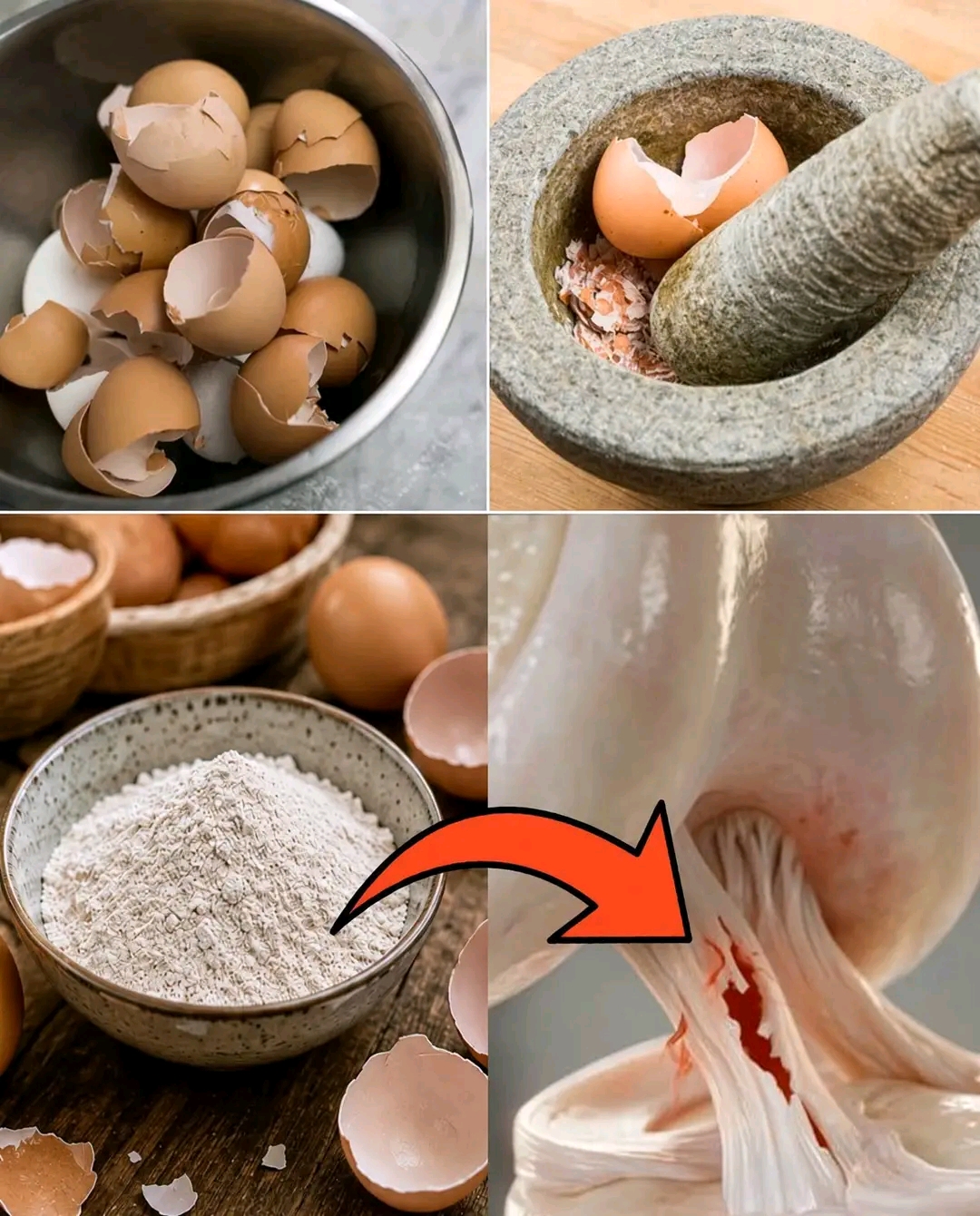
Did you know that eggshells contain calcium? 🥚 Instead of throwing them away, you can learn how eggshells have traditionally been reused and how to prepare a fine eggshell powder at home.
Calcium is an essential mineral that helps maintain strong bones and supports normal muscle function. Our bodies need enough calcium throughout life, especially as we get older. However, knee pain and weak legs can have many different causes, and eggshell powder is not a proven treatment for joint pain, arthritis, or muscle weakness.
This guide explains how to prepare eggshells carefully, what you should know about their potential benefits, and how to support your bones and joints with a balanced lifestyle.
Ingredients
To prepare eggshell powder for educational purposes, you will need:
- 6–8 clean eggshells
- Fresh water for washing
- A clean saucepan
- A baking tray
- An oven
- A clean coffee grinder or food processor suitable for grinding dry ingredients
- A fine-mesh sieve
- A clean, dry, airtight container
Important: Homemade eggshell powder is not a standardized calcium supplement. Its calcium content, purity, and safety cannot be reliably determined in a home kitchen.
Instructions
Step 1: Collect the eggshells
Save the shells from fresh eggs. Remove any remaining egg white or membrane and rinse the shells thoroughly under running water.
Step 2: Heat the eggshells
Place the cleaned shells in a saucepan of water and bring the water to a boil. Boiling helps reduce some microbial contamination, but it does not guarantee that the final powder will be safe.
Step 3: Dry the shells
Drain the shells and arrange them in a single layer on a clean baking tray. Dry them thoroughly in an oven at approximately 200°F (95°C) until they are completely dry and brittle.
Step 4: Grind carefully
Once completely cool, the shells can be ground into a fine powder using clean equipment. Avoid breathing in the dust, and make sure no sharp pieces remain.
Step 5: Check the texture
A fine sieve can help separate larger fragments. However, a powder that looks smooth is not necessarily free from contaminants or suitable for consumption.
Step 6: Store safely
For non-food uses, store the dry powder in a clean, sealed, clearly labeled container in a dry location. Do not assume that homemade processing makes it safe to eat.
Methods
There are several ways people have traditionally reused eggshells.
1. The boiling method
Boiling the cleaned shells in water is a traditional preparation step intended to reduce microbial contamination.
2. The oven-drying method
Drying the shells thoroughly makes them brittle and easier to grind.
3. The grinding method
A clean grinder can turn brittle shells into a fine powder. Fine grinding reduces the size of the particles but does not establish a safe or accurate dietary dose.
4. The garden method
Crushed eggshells can be added to compost or used as a soil amendment where appropriate. They release calcium slowly, so they are not an instant solution for plant problems.
For dietary calcium, established food sources or regulated supplements are generally more predictable than homemade eggshell powder.
History of Eggshells
Eggshells have been reused in households and gardens for generations. In many communities, families looked for practical ways to reduce kitchen waste, including adding crushed shells to compost and garden soil.
Eggshells attracted nutritional interest because they are rich in calcium carbonate, a compound also found in certain mineral supplements and antacid products.
Modern interest in eggshell-derived calcium has led to research into its composition and potential uses. However, research into calcium-rich materials does not automatically establish that homemade eggshell powder is safe, properly dosed, or effective for treating knee pain.
Potential Benefits of Calcium
Calcium plays several important roles in the body.
1. Supports normal bone health
Calcium is a major component of bones and teeth. Adequate calcium intake helps maintain normal bone structure.
2. Helps muscles function normally
Calcium is involved in muscle contraction, including the normal contractions needed for movement.
3. Supports nerve signaling
The body uses calcium to help transmit signals between nerves and other cells.
4. Helps maintain teeth
Adequate calcium intake contributes to maintaining healthy teeth as part of an overall balanced diet.
5. Helps meet nutritional needs
People who do not consume enough calcium-rich foods may benefit from reviewing their diet with a qualified healthcare professional.
A crucial distinction: Getting enough calcium supports normal body functions, but taking extra calcium does not necessarily relieve knee pain, strengthen weak legs immediately, or repair damaged cartilage.
What About Knee Pain and Weak Legs?
Knee discomfort and leg weakness should not automatically be blamed on calcium deficiency.
Possible causes include osteoarthritis, muscle weakness, injuries, vitamin deficiencies, nerve problems, and other medical conditions.
For everyday bone and joint support, consider these practical steps:
- Eat calcium-rich foods such as yogurt, milk, cheese, calcium-fortified alternatives, or calcium-set tofu.
- Include vitamin D sources in your diet and discuss testing or supplementation with a clinician if deficiency is a concern.
- Do appropriate strengthening and balance exercises, increasing activity gradually.
- Maintain a healthy, balanced diet with sufficient protein.
- Seek medical advice if pain persists, weakness worsens, or walking becomes difficult.
A hot, swollen knee with fever, sudden severe pain, or new inability to bear weight needs urgent medical assessment. Sudden weakness affecting one side of the body also requires emergency care.
Important Safety Information
Although eggshells contain calcium carbonate, homemade eggshell powder has several limitations.
- Its exact calcium content is unknown without testing.
- Improper handling can introduce harmful microorganisms.
- Coarse particles may irritate or injure the digestive tract.
- Excess calcium can contribute to constipation and kidney stones and may interfere with the absorption of certain medicines.
- Calcium supplements can interact with some medications, including thyroid medicines and certain antibiotics.
People with kidney disease, a history of kidney stones, or other conditions affecting calcium balance should not use homemade eggshell powder as a supplement without medical guidance.
If calcium supplementation is needed, ask a healthcare professional or pharmacist to help select a regulated product and an appropriate dose.
Nutritional Formation: What Are Eggshells Made Of?
Eggshells consist mainly of calcium carbonate, along with a small amount of other minerals and organic material.
Calcium carbonate is also used in some regulated calcium supplements. However, the fact that two materials contain the same calcium compound does not mean they have equivalent quality, purity, safety, or dosing.
The amount of calcium absorbed by the body can depend on several factors, including the preparation, particle size, the person’s health, and how much calcium is consumed at one time.
For that reason, there is no universally safe homemade eggshell-powder dosage that can be recommended for everyone.
A Better Daily Routine for Bone and Joint Support
Here is a simple routine to consider:
Morning: Enjoy a calcium-containing breakfast, such as yogurt with oats and fruit.
Afternoon: Take a comfortable walk if your symptoms allow, and include protein-rich foods in your meal.
Evening: Follow any strengthening exercises recommended by your healthcare professional. Gentle movement can help maintain mobility, but stop if an exercise causes significant pain.
Throughout the day: Drink enough water and aim for a balanced diet that provides calcium, vitamin D, protein, and other essential nutrients.
Consistency is more useful than relying on a single homemade ingredient.
Conclusion
Eggshells are a natural source of calcium carbonate, and reusing them can be an interesting way to reduce household waste. However, homemade eggshell powder should not be promoted as a proven remedy for knee pain, weak legs, arthritis, or damaged joints.
The safest approach is to meet your calcium needs through a balanced diet and, when appropriate, a regulated supplement recommended by a healthcare professional.
Remember: healthy bones and strong legs depend on several factors, including nutrition, physical activity, vitamin D, muscle strength, and proper medical care.