Introduction
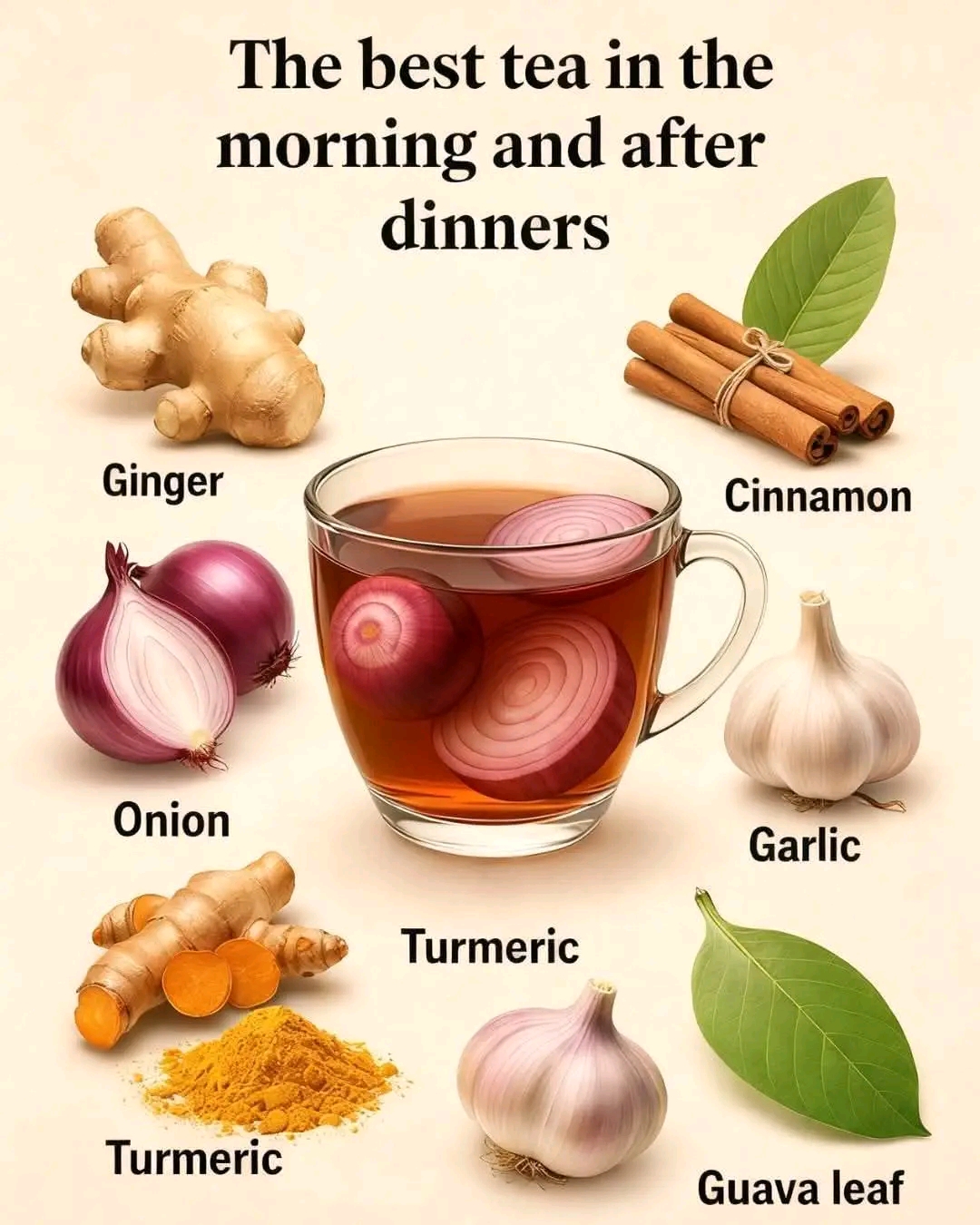
This warming herbal tea combines ginger, garlic, onion, turmeric, cinnamon, and guava leaves into a flavorful, aromatic drink. It can be enjoyed in the morning or after a meal as part of a balanced lifestyle.
The combination has a strong, earthy flavor: ginger adds warmth, cinnamon adds sweetness and spice, turmeric gives the tea its golden color, while garlic and onion contribute a savory character. Guava leaves make the infusion more herbal and fragrant.
Important: This tea is a traditional-style wellness drink, not a treatment or cure for infections, diabetes, cancer, high blood pressure, or other diseases. The health benefits of several of these ingredients are still being studied.
📝 Ingredients
Makes about 2–3 cups
- 3 cups (750 ml) water
- 1 small piece fresh ginger, about 3–4 cm, sliced
- 1–2 garlic cloves, lightly crushed
- ¼–½ small onion, sliced
- ½–1 teaspoon ground turmeric or 2–3 thin slices fresh turmeric
- 1 small cinnamon stick
- 2–3 young, clean guava leaves
- 1–2 teaspoons honey, optional
- 1–2 teaspoons fresh lemon juice, optional
- A small pinch of black pepper, optional
👩🍳 Instructions
1. Prepare the ingredients
Wash the ginger and guava leaves thoroughly. Slice the ginger and onion. Lightly crush the garlic so its flavor can infuse into the water.
2. Start the infusion
Pour the water into a saucepan and add the ginger, onion, garlic, turmeric, and cinnamon.
Bring the mixture to a gentle boil.
3. Simmer
Reduce the heat and simmer gently for approximately 10–15 minutes with the lid partially covered.
This allows the stronger ingredients to release their flavors.
4. Add the guava leaves
Add the washed guava leaves during the final 5 minutes of simmering.
Avoid using leaves that may have been exposed to pesticides or other chemicals.
5. Strain
Remove the saucepan from the heat and strain the tea into cups.
6. Finish the tea
Allow it to cool slightly. If desired, add:
- A little honey for sweetness
- Fresh lemon juice for brightness
- A tiny pinch of black pepper
Serve warm.
🌿 Preparation Method
Boil → simmer → infuse → strain → serve
The longer simmering time is useful for the tougher ingredients such as ginger, onion, garlic, turmeric, and cinnamon. Guava leaves can be added toward the end so their herbal flavor remains pleasant.
For a milder tea, use less garlic and onion.
For a stronger tea, increase the ginger or cinnamon slightly rather than dramatically increasing the garlic or turmeric.
🕰️ Traditional Background & History
The ingredients in this tea come from different culinary and traditional herbal traditions.
Ginger has been used for centuries in Asian and Middle Eastern food and traditional preparations.
Garlic and onion have an exceptionally long history as foods and traditional ingredients. They are valued worldwide for their distinctive flavors and aromatic compounds.
Turmeric has deep roots in South Asian cooking and traditional practices. Its characteristic golden color comes primarily from curcuminoids, including curcumin.
Cinnamon has been used for centuries as a spice and aromatic ingredient across Asia, the Middle East, Europe, and North Africa.
Guava leaves have also been used traditionally in various regions to prepare herbal infusions.
This particular combination, however, should be considered a modern homemade herbal infusion rather than a historically established single traditional recipe.
💚 Potential Benefits
🫚 Ginger
Ginger is well known as a culinary spice and has been studied for its potential role in supporting digestion and reducing nausea. It also provides flavorful aromatic compounds.
🧄 Garlic
Garlic contains sulfur-containing compounds that contribute to its strong aroma and have been widely studied for their potential cardiovascular and antioxidant effects.
🧅 Onion
Onions provide plant compounds such as flavonoids and sulfur-containing compounds. They can contribute antioxidants to the diet.
🌿 Turmeric
Turmeric contains curcuminoids, especially curcumin, which have been extensively researched for their antioxidant and anti-inflammatory properties. However, drinking turmeric tea does not mean that therapeutic amounts of curcumin are being consumed.
🌰 Cinnamon
Cinnamon adds flavor and contains various plant compounds with antioxidant activity. Research has investigated its possible effects on blood glucose and other aspects of health, but it should not replace medical treatment.
🍃 Guava leaves
Guava leaves contain polyphenols and other plant compounds and have traditionally been prepared as tea. Research into their possible health effects is ongoing.
☕ Warm hydration
One of the simplest benefits is that the drink contributes to your daily fluid intake. A warm beverage can also be comforting after a meal.
🍵 Best Time to Drink It
Morning
A small cup can be enjoyed with or after breakfast.
After dinner
If you tolerate the ingredients well, a small cup can be enjoyed after dinner.
Because ginger, garlic, onion, and cinnamon can be quite strong, start with a mild preparation rather than drinking a very concentrated version.
⭐ Tips for Better Flavor
- Use fresh ginger whenever possible.
- Don’t use too much garlic—the flavor can quickly become overpowering.
- Use a cinnamon stick for a smoother flavor.
- Add honey only after the tea has cooled slightly.
- Lemon can make the drink much more refreshing.
- If turmeric stains your saucepan or cup, wash it promptly.
- Start with ½ cup the first time to see how your stomach responds.
⚠️ Important Safety Notes
This is a food-style herbal drink, not a medicine.
- Large amounts of ginger, garlic, turmeric, or cinnamon may cause heartburn, stomach irritation, or digestive discomfort in some people.
- Garlic and ginger may interact with certain medications, including some medicines that affect blood clotting.
- Turmeric supplements are much more concentrated than culinary turmeric tea and have different safety considerations.
- Cassia cinnamon contains coumarin, so very large quantities taken regularly aren’t advisable.
- If you are pregnant, have gallbladder or bleeding problems, or take regular medication, ask a healthcare professional before making concentrated herbal drinks a daily habit.
- Do not use guava leaves from plants treated with pesticides unless they are confirmed safe for consumption.
🍯 Optional Golden Version
For a gentler, sweeter version:
Ingredients
- 2 cups water
- 3 slices ginger
- ½ teaspoon turmeric
- 1 cinnamon stick
- 1 guava leaf
- 1 teaspoon honey
- A squeeze of lemon
Simmer the ginger, turmeric, cinnamon, and guava leaf for about 10 minutes. Strain, then add honey and lemon.
This version is considerably easier to drink than the stronger garlic-and-onion preparation.
❤️ Why People Love This Tea
The appeal of this drink is its combination of warmth, spice, aroma, and traditional ingredients in one simple cup. Ginger and cinnamon make it pleasantly warming, turmeric gives it a beautiful golden color, and the herbal infusion from guava leaves adds another layer of flavor.
It can be a comforting addition to a healthy routine—but it shouldn’t be presented as a cure or a substitute for proper medical care.
Conclusion
Ginger, garlic, onion, turmeric, cinnamon, and guava leaf tea is an interesting homemade herbal infusion with a bold flavor and a variety of plant compounds.
For the best experience, keep the recipe moderate and balanced rather than making an extremely concentrated drink. Enjoy a small warm cup in the morning or after dinner, alongside a varied diet, good hydration, sleep, and regular physical activity.