Introduction
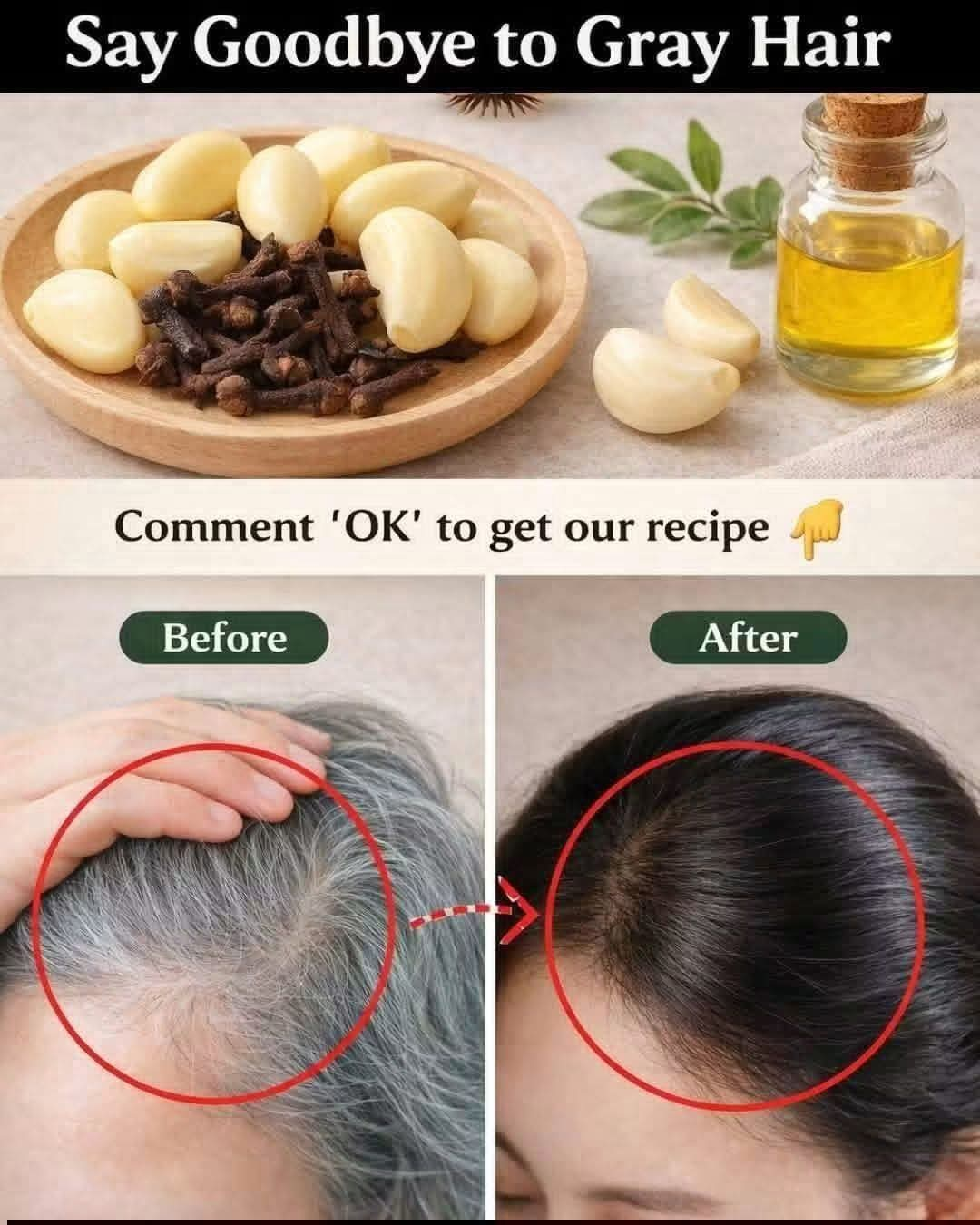
Gray hair is a natural part of aging, but many people look for ways to maintain their hair’s natural color, shine, and strength. For generations, natural ingredients such as garlic and cloves have been used in traditional hair care routines because of their distinctive properties and rich history in home remedies.
Garlic is known for its sulfur-containing compounds, while cloves contain eugenol and other antioxidant compounds. Together, these ingredients can be used to prepare a simple homemade scalp-care treatment.
Although garlic and cloves are popular in traditional beauty practices, there is currently no reliable scientific evidence that applying them to the hair reverses gray hair or restores its original color. Gray hair is commonly associated with aging, genetics, and changes in pigment-producing cells. This recipe is intended for cosmetic hair care rather than as a proven gray-hair treatment.
Recipe Information
- Recipe Name: Garlic and Clove Hair Care Rinse
- Category: Natural Hair Care
- Preparation Time: 5 minutes
- Infusion Time: 15–20 minutes
- Cooling Time: 30 minutes
- Total Time: Approximately 50 minutes
- Difficulty: Easy
- Recommended Use: Occasional use, only if the ingredients are well tolerated
Ingredients
You will need the following ingredients to prepare this traditional-inspired hair rinse:
- 2 small garlic cloves
- 1 teaspoon whole cloves
- 2 cups (approximately 475 ml) water
- A clean saucepan
- A fine strainer
- A clean glass container
- A clean towel
Optional ingredient: A small amount of fragrance-free conditioner can be used separately after rinsing if your hair feels dry. Avoid adding essential oils or other concentrated ingredients to the homemade mixture.
Why These Ingredients Are Used
1. Garlic
Garlic has a long history in traditional remedies and contains sulfur-containing compounds. Sulfur is also a component of certain proteins found in the body, including keratin, which is important for hair structure.
However, eating garlic or applying it to the scalp has not been shown to restore natural hair pigmentation. Raw garlic can also irritate the skin and cause burns, so this recipe uses a diluted, cooled infusion and should be avoided by anyone with sensitive or damaged skin.
2. Whole Cloves
Cloves are aromatic flower buds commonly used in cooking and traditional preparations. They contain eugenol, a compound studied for several biological properties.
Cloves can provide a pleasant, spicy fragrance to the rinse, but there is no established evidence that they reverse gray hair or stimulate the production of hair pigment.
3. Water
Water serves as the base for the infusion, allowing some water-soluble substances and aromatic compounds to enter the mixture. It also helps dilute the preparation.
Use clean drinking water and a clean container to reduce contamination.
Instructions
Follow these steps to prepare your garlic and clove hair rinse.
Step 1: Prepare the Garlic
Peel two small garlic cloves and lightly crush them. Avoid blending them into a thick paste because concentrated raw garlic can be harsh on the skin.
Step 2: Measure the Cloves
Measure one teaspoon of whole cloves. Whole cloves are preferable to concentrated clove essential oil, which can cause irritation when used improperly.
Step 3: Heat the Water
Pour two cups of water into a clean saucepan and bring it to a gentle boil.
Step 4: Add the Ingredients
Turn the heat down and add the crushed garlic and whole cloves to the water.
Allow the mixture to simmer gently for approximately five minutes. Avoid prolonged boiling.
Step 5: Let the Mixture Infuse
Remove the saucepan from the heat, cover it, and leave the ingredients to infuse for another 10–15 minutes.
This allows the water to absorb some of the ingredients’ aromatic compounds.
Step 6: Strain the Mixture
Carefully strain the liquid to remove all pieces of garlic and cloves. Let the liquid cool completely to room temperature.
Never apply hot liquid to your scalp.
Step 7: Perform a Safety Test
Garlic can cause significant skin irritation, even when diluted. The safest option is to avoid applying a garlic preparation directly to the scalp.
If you choose to try any homemade hair rinse, first consult a dermatologist if you have a history of skin reactions. Do not use it on broken, inflamed, or irritated skin, and stop immediately if you experience burning, redness, itching, or swelling. A small test does not guarantee that a reaction will not occur.
Step 8: Apply Carefully
If the preparation is tolerated and you decide to use it, keep it away from your eyes and face. Do not scrub it into your scalp or leave it on overnight.
Rinse thoroughly with plenty of water. Discard the leftover mixture rather than storing it for future use.
Preparation Method
The preparation method is simple and resembles making a herbal infusion.
First, heat the water. Next, add the lightly crushed garlic and whole cloves, then allow the ingredients to simmer briefly. After removing the saucepan from the heat, cover it and leave the mixture to infuse. Finally, strain the liquid and let it cool completely.
The result is a lightly aromatic liquid that can be used as a traditional-inspired hair-care preparation, provided the user understands its limitations and potential for irritation.
Do not mix this preparation with hair dye, chemical relaxers, or other scalp treatments. Avoid combining it with additional home remedies simply to make it stronger.
History of Garlic and Cloves in Traditional Care
Garlic has been cultivated and used in food and traditional medicine for thousands of years. It has appeared in historical practices across several cultures, where people valued it for its strong aroma and distinctive properties.
Cloves also have a long history. Originating in the Maluku Islands of Indonesia, they became an important spice in Asian, Middle Eastern, African, and European trade. Their fragrance made them useful in cooking, perfumery, and traditional preparations.
Over time, garlic and cloves became ingredients in various homemade beauty recipes, including scalp oils and herbal rinses.
However, the long history of an ingredient does not establish that a particular treatment works. Traditional use should be distinguished from scientifically demonstrated results, especially when claims involve reversing gray hair.
Potential Benefits and Limitations
1. A Simple Homemade Preparation
This recipe uses common household ingredients and a straightforward preparation method. It can be an educational way to explore traditional botanical ingredients, although it is not necessary for maintaining healthy hair.
2. Aromatic Properties
Cloves have a characteristic warm, spicy scent, while garlic has a strong, distinctive odor. The resulting infusion may smell pleasant to some people but unpleasant to others.
3. Interest in Antioxidants
Garlic and cloves contain compounds that have been studied for antioxidant activity in laboratory settings. These findings do not prove that applying the ingredients to human hair will improve hair growth or restore its color.
4. A Reminder to Care for the Scalp
Healthy-looking hair benefits from gentle cleansing, suitable conditioning, and avoiding excessive heat or harsh chemical treatments. These established habits are more useful than relying on an unproven gray-hair remedy.
5. No Proven Gray-Hair Reversal
The most important limitation is that this mixture has not been shown to reverse gray hair. Once hair grows out without its usual pigment, a homemade rinse cannot reliably restore that pigment.
Gray hair often results from aging and genetics. Some cases of premature graying can be associated with nutritional deficiencies or other health factors, but not every case has a reversible cause.
Important Safety Information
Natural ingredients are not automatically safe for everyone.
- Raw garlic can cause irritant contact dermatitis and even chemical burns.
- Clove preparations may irritate the skin, particularly when concentrated.
- Clove essential oil should not be substituted for whole cloves in this recipe.
- Never apply the mixture to broken skin or near the eyes.
- Stop using it immediately if you experience discomfort.
- Keep the preparation away from children and pets.
If your hair has started turning gray unusually early or the change occurs suddenly, consult a healthcare professional. Depending on your circumstances, they may assess whether nutritional deficiencies or other underlying factors deserve attention.
Better Ways to Care for Gray Hair
If your goal is to keep your hair looking healthy and attractive, consider these practical alternatives:
Use a gentle shampoo: Choose a product suited to your hair type and wash as often as needed.
Condition regularly: Conditioner helps reduce tangles, dryness, and breakage.
Protect your hair from heat: Limit excessive use of straighteners and curling irons.
Eat a balanced diet: Include adequate protein, vegetables, fruits, and sources of essential vitamins and minerals.
Consider cosmetic coloring: If you want to cover gray hair, a suitable hair dye or color-depositing product is a more reliable option than garlic and cloves.
Seek advice for premature graying: A healthcare professional can help identify possible contributing factors when appropriate.
Frequently Asked Questions
Can garlic and cloves turn gray hair black again?
There is no reliable scientific evidence that garlic and cloves can restore the natural pigment of gray hair.
How long does this remedy take to work?
There is no established treatment timeline because this preparation has not been demonstrated to reverse gray hair. Avoid claims that results will appear after a specific number of days or weeks.
Can I use it every day?
Daily use is not recommended. Repeated exposure may irritate the scalp, especially when garlic is involved. Avoid applying the mixture if you have sensitive skin or any scalp condition.
Can I leave it on overnight?
No. Leaving a homemade garlic preparation on the scalp for extended periods increases the risk of irritation and burns.
Can this mixture help hair grow faster?
There is no good clinical evidence that this particular mixture makes hair grow faster or prevents hair loss.
Is it suitable for every hair type?
It has not been established as safe or beneficial for all hair types. People with sensitive skin, eczema, scalp inflammation, or a history of reactions should avoid it unless advised otherwise by a qualified professional.
Conclusion
Garlic and cloves have fascinating histories as culinary spices and traditional ingredients. They can be combined with water to make a simple aromatic infusion, but claims that this mixture eliminates gray hair or restores natural hair color are not supported by reliable scientific evidence.
The best approach to hair care is to protect the scalp, use gentle hair products, maintain a balanced diet, and seek professional advice when graying occurs unusually early or alongside other symptoms.
Remember that gray hair is a normal part of life for many people. Whether you choose to embrace your natural color or cover it with a cosmetic product, healthy hair begins with gentle and consistent care.