Introduction
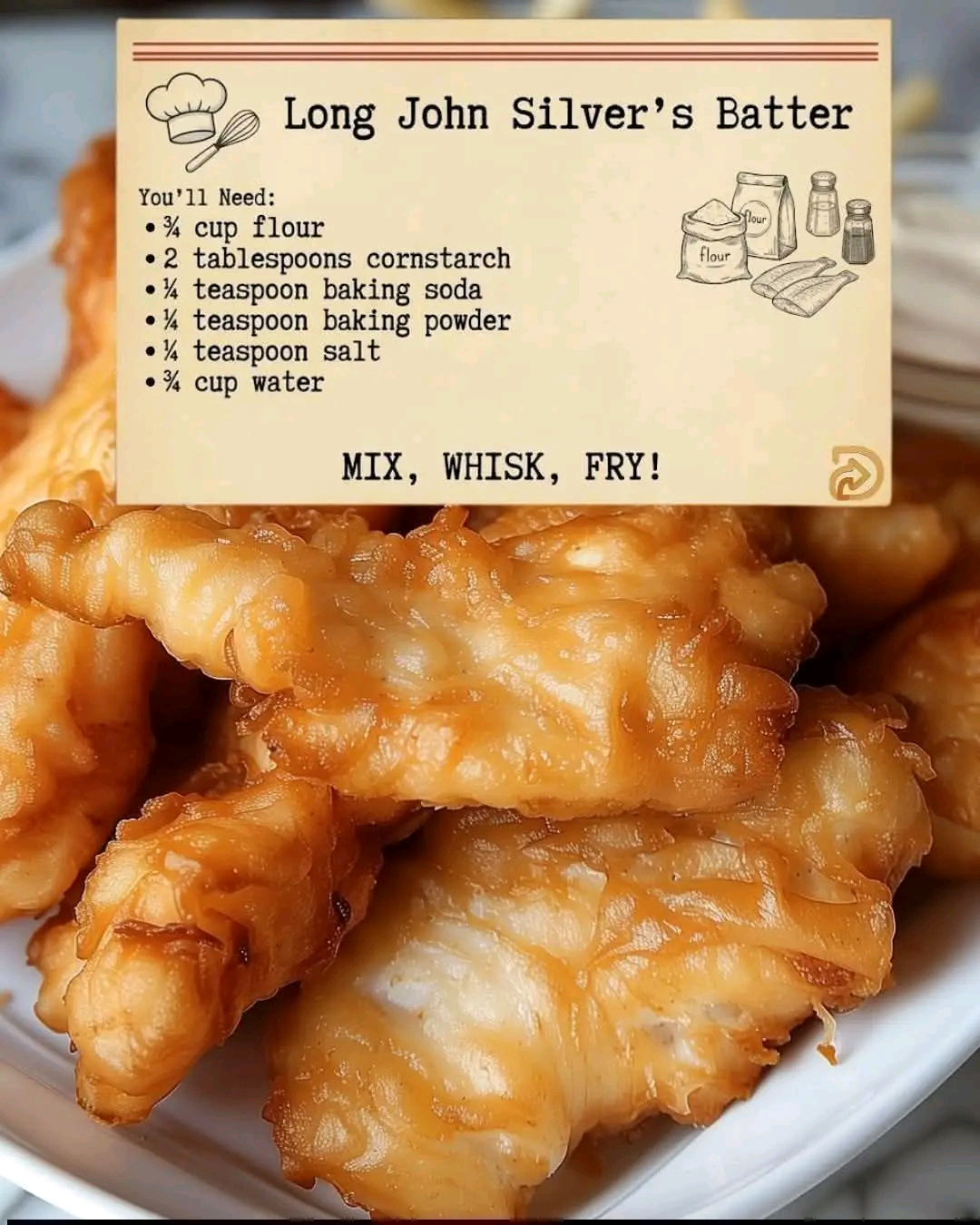
If you love that light, crunchy, golden coating associated with Long John Silver’s, this homemade batter is a great way to recreate the style in your own kitchen. The secret is a thin, well-seasoned batter and properly heated oil, which together create a crisp shell while keeping the fish or chicken tender inside.
This recipe works beautifully for white fish, shrimp, chicken tenders, chicken strips, and even vegetables.
Recipe note: This is a homemade copycat-style recipe inspired by the restaurant’s crispy fried coating, not the restaurant’s proprietary recipe.
A Little History
Long John Silver’s became known in the United States for its fried seafood and distinctive crispy coating. Its food was influenced by the tradition of British-style fried fish, while its restaurant batter developed its own lighter, craggy, crunchy character.
Over the years, home cooks have created many copycat versions using combinations of flour, cornstarch, baking powder, seasonings, and cold liquid. The exact restaurant formula is proprietary, so this recipe focuses on reproducing the texture and flavor style rather than claiming to be the original formula.
Ingredients
For the Crispy Batter
- 1 cup all-purpose flour
- ½ cup cornstarch
- 1 teaspoon baking powder
- 1 teaspoon salt
- ½ teaspoon paprika
- ½ teaspoon garlic powder
- ½ teaspoon onion powder
- ¼ teaspoon black pepper
- ¼ teaspoon white pepper, optional
- ¼ teaspoon sugar
- 1 cup very cold water
- ¼ cup cold club soda or additional cold water
- 1 tablespoon vegetable oil
For the Fish
- 1½–2 pounds white fish fillets, such as cod, haddock, pollock, or tilapia
- Salt and pepper, to taste
- A little flour for dusting
For Chicken
- 1½–2 pounds boneless, skinless chicken breast or tenders
- Salt and pepper, to taste
- A little flour for dusting
For Frying
- Vegetable, canola, peanut, or another suitable high-heat frying oil
Why These Ingredients Work
Flour provides structure and creates the main crust.
Cornstarch is especially important for crispiness. It reduces gluten formation and helps produce a lighter, crunchier coating.
Baking powder creates tiny pockets in the batter, helping the crust become airy and crisp.
Cold liquid helps maintain a lighter batter. Club soda can add additional lightness because of its carbonation.
Paprika, garlic, onion, and pepper provide the savory flavor associated with seasoned fried food.
Preparation
Step 1: Prepare the Fish or Chicken
Pat the fish or chicken very dry with paper towels. Excess moisture can make the batter slide off.
Season lightly with salt and pepper.
If using chicken breasts, cut them into strips or smaller pieces so they cook evenly.
Step 2: Make the Dry Mixture
In a large bowl, whisk together:
- Flour
- Cornstarch
- Baking powder
- Salt
- Paprika
- Garlic powder
- Onion powder
- Black pepper
- White pepper
- Sugar
Mix thoroughly so the seasonings are distributed evenly.
Step 3: Add the Cold Liquid
Slowly pour in the cold water while whisking.
Add the club soda and tablespoon of oil.
Mix until you have a smooth batter.
The batter should be thick enough to coat the food but thin enough to drip slowly from a spoon.
Don’t overmix. A few tiny lumps are perfectly fine.
Step 4: Heat the Oil
Heat approximately 2–3 inches of oil in a heavy pot or deep fryer.
Bring the oil to about 350°F / 175°C.
A kitchen thermometer is strongly recommended.
Maintaining the oil temperature is one of the most important secrets to crispy fried food.
Step 5: Dust the Food
Lightly coat each piece of fish or chicken with flour before dipping it into the batter.
Shake off excess flour.
This dry coating gives the wet batter something to grip.
Step 6: Batter the Food
Dip each piece completely into the batter.
Allow excess batter to drip back into the bowl.
Immediately place the battered piece carefully into the hot oil.
Do not overcrowd the pot.
Step 7: Fry
For Fish
Fry until the coating is deep golden brown and crispy and the fish is cooked through.
Depending on thickness, this generally takes several minutes.
For Chicken
Chicken requires more cooking time than fish. Fry until the coating is golden and the chicken reaches a safe internal temperature of 165°F / 74°C.
Cooking time varies depending on the thickness of the pieces.
Step 8: Drain
Remove the cooked pieces with tongs or a slotted spoon.
Place them on a wire rack over a baking sheet.
A wire rack is preferable to placing the food directly on paper towels because it allows air to circulate underneath and helps preserve the crunch.
The Crispy-Batter Method
For especially crunchy results, remember these five principles:
- Keep the batter cold.
- Use cornstarch.
- Don’t overmix the batter.
- Keep the oil around 350°F / 175°C.
- Don’t overcrowd the fryer.
If too many pieces are added at once, the oil temperature can drop dramatically, producing a greasy rather than crispy coating.
Extra-Crispy Variation
For an even crunchier crust, try this technique:
Mix the batter as directed, then drizzle 1–2 tablespoons of batter into the hot oil around the piece of fish or chicken as it fries.
Some of these little pieces of batter will cling to the food and create additional crispy edges.
Be careful when adding batter to hot oil because it can splatter.
How to Keep the Batter Crispy
After frying:
- Keep cooked pieces on a wire rack.
- Don’t cover them tightly while they’re hot.
- Don’t stack the pieces immediately.
- Serve as soon as possible.
- If keeping them warm, use a low oven rather than sealing them in a container.
Serving Ideas
This crispy batter pairs wonderfully with:
- French fries
- Coleslaw
- Tartar sauce
- Lemon wedges
- Malt vinegar
- Hot sauce
- Cocktail sauce
- Pickles
- Corn on the cob
- Potato wedges
For chicken, try serving the crispy pieces with honey mustard, barbecue sauce, ranch dressing, or a spicy dipping sauce.
Benefits of Making It at Home
Making your own crispy fish or chicken gives you control over:
- The amount of salt
- The seasonings
- The type of fish or chicken
- The size of each portion
- The frying oil
- The freshness of the ingredients
You can also adjust the seasoning to suit your family. For a spicier version, add cayenne pepper or chili powder. For a milder version, reduce the pepper and paprika.
Of course, deep-fried food is still relatively high in calories and fat, so it is best enjoyed as an occasional meal rather than as an everyday food.
Common Problems and Solutions
The batter falls off
Make sure the fish or chicken is dry and lightly dusted with flour before dipping it into the batter.
The coating is soggy
The oil may not be hot enough, or the pan may be overcrowded.
The coating becomes too dark
The oil may be too hot. Reduce the temperature slightly.
The batter is too thick
Add a little more cold water.
The batter is too thin
Whisk in a small amount of flour or cornstarch.
The food is greasy
Maintain the frying temperature and avoid overcrowding the pan.
My Favorite Formula
For a simple crispy coating, remember:
2 parts flour + 1 part cornstarch + cold seasoned liquid + hot oil = a wonderfully crisp fried coating.
This basic formula can become your go-to batter for fish, chicken, shrimp, onion rings, mushrooms, zucchini, and other vegetables.
For the Lovers of Crispy Food
If you’re one of those people who believes the crispy edges are the best part, this recipe is for you!
The combination of golden batter, tender fish or juicy chicken, and a flavorful dipping sauce makes this a fantastic homemade comfort-food meal.
The best part is that you can make the batter fresh whenever you’re craving that classic crispy fried-food experience.
Conclusion
This Long John Silver’s–style crispy batter is simple, versatile, and delicious. The combination of flour, cornstarch, baking powder, cold liquid, and carefully controlled frying temperature gives you a light, crunchy coating without needing the restaurant’s exact proprietary recipe.
Try it with fish first, then use the same batter for chicken and other foods. Once you master the temperature and batter consistency, you’ll have a dependable homemade crispy coating you can use again and again.