Introduction
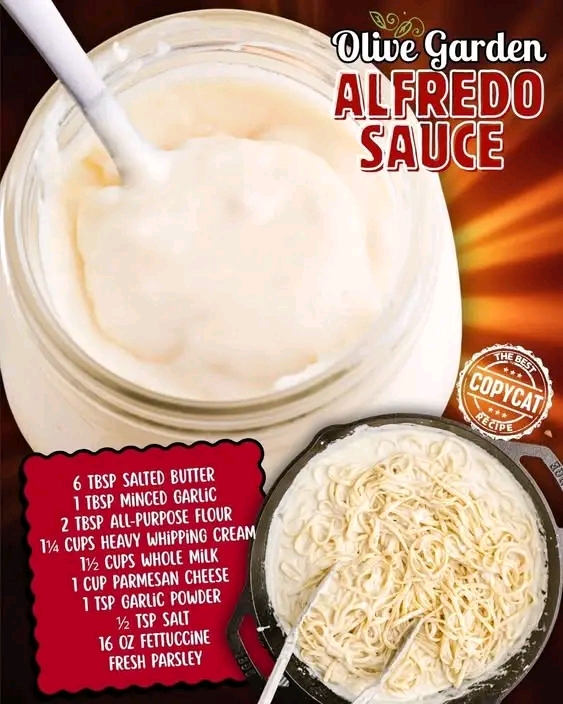
Bring the comforting taste of a creamy Italian-American restaurant dinner straight to your kitchen with this Copycat Olive Garden Alfredo Sauce.
This rich and silky sauce comes together in less than 20 minutes using simple ingredients: butter, garlic, cream, milk, Parmesan cheese, and a little flour to help create a beautifully smooth consistency.
The result is a luxurious sauce that coats every strand of pasta with a creamy, cheesy texture and irresistible garlic flavor.
Serve it over fettuccine, chicken, shrimp, vegetables, or even use it as a dipping sauce for warm breadsticks. It is an easy recipe that turns an ordinary dinner into something that feels restaurant-worthy.
🍝 Recipe Information
Recipe: Copycat Olive Garden Alfredo Sauce
Style: Italian-American
Preparation: 5 minutes
Cooking: 10–15 minutes
Total: About 20 minutes
Yield: Approximately 3–4 cups sauce
Difficulty: Easy
🛒 Ingredients
For the Alfredo Sauce
- 6 tablespoons salted butter
- 1 tablespoon minced garlic
- 2 tablespoons all-purpose flour
- 1¼ cups heavy whipping cream
- 1½ cups whole milk
- 1 cup freshly grated Parmesan cheese
- 1 teaspoon garlic powder
- ½ teaspoon salt
Optional Ingredients
- ¼ teaspoon freshly ground black pepper
- 1 tablespoon chopped fresh parsley
- ¼ cup extra Parmesan for serving
- 1–2 tablespoons reserved pasta water, if needed
For Serving
- 12–16 oz fettuccine or your favorite pasta
- Freshly grated Parmesan
- Chopped parsley
👩🍳 Instructions
Step 1: Prepare the Pasta
Bring a large pot of salted water to a boil.
Cook your fettuccine according to the package directions until al dente.
Before draining, reserve about ½ cup of pasta water.
Drain the pasta and set it aside.
Step 2: Melt the Butter
Place a large saucepan over medium-low heat.
Add the butter and allow it to melt slowly.
Avoid letting the butter become dark or browned because this recipe is designed to have a smooth, creamy flavor.
Step 3: Add the Garlic
Add the minced garlic to the melted butter.
Cook for approximately 30–60 seconds, stirring constantly.
The garlic should become fragrant without turning brown.
Burned garlic can make the sauce bitter.
Step 4: Make the Roux
Sprinkle the flour over the butter and garlic.
Whisk continuously for about 1 minute.
This creates a simple roux that will help thicken the sauce.
Don’t allow the flour to brown.
Step 5: Add the Cream and Milk
Slowly pour in the heavy whipping cream while whisking constantly.
Then gradually add the whole milk.
Continue whisking to prevent lumps.
Add the garlic powder and salt.
Keep the heat at medium-low.
Step 6: Simmer the Sauce
Allow the mixture to cook gently for approximately 3–5 minutes.
Stir frequently.
The sauce will gradually become thicker and creamier.
Do not bring it to a hard boil.
A gentle simmer is enough.
Step 7: Add Parmesan
Reduce the heat to low.
Gradually add the freshly grated Parmesan cheese.
Whisk after each addition until the cheese has completely melted.
Continue until the sauce becomes smooth, creamy, and glossy.
Taste and adjust the seasoning if necessary.
Step 8: Combine With Pasta
Add the cooked fettuccine directly to the sauce.
Toss gently until every strand is coated.
If the sauce becomes too thick, add a tablespoon or two of reserved pasta water.
Continue tossing until you reach the consistency you like.
Step 9: Serve
Transfer the creamy pasta to serving plates.
Top with freshly grated Parmesan and chopped parsley.
Serve immediately while the sauce is warm and silky.
🍳 Preparation Methods
Method 1: Classic Stovetop Method
The easiest method is to prepare everything in one saucepan:
Butter → Garlic → Flour → Cream → Milk → Parmesan
This method produces a smooth sauce in approximately 15–20 minutes.
Method 2: Extra-Smooth Method
For an especially smooth sauce, grate the Parmesan very finely.
Add it gradually over low heat rather than dumping it in all at once.
This helps the cheese melt evenly.
Method 3: Chicken Alfredo
Cook sliced chicken breast separately with a little olive oil, salt, pepper, and garlic.
Slice the cooked chicken and place it over the finished Alfredo pasta.
Method 4: Shrimp Alfredo
Sauté peeled shrimp with garlic and butter until cooked through.
Serve the shrimp over the Alfredo-coated pasta.
🧀 How the Sauce Forms
The creamy consistency comes from several ingredients working together.
Butter
Provides richness and creates the base for the sauce.
Flour
Combines with the butter to form a roux, which thickens the milk and cream.
Heavy Cream
Provides richness and a luxurious mouthfeel.
Whole Milk
Balances the richness of the cream while keeping the sauce pourable.
Parmesan
Adds salty, nutty flavor and contributes to the final thickness.
The overall formation is:
Butter + Flour → Roux → Milk + Cream → Gentle Simmer → Parmesan → Creamy Alfredo Sauce
The most important rule is to avoid overheating the cheese. Gentle heat helps maintain a smooth texture.
📜 History of Alfredo Sauce
The original Alfredo sauce is associated with Alfredo di Lelio, an Italian restaurateur in Rome.
The original preparation was famously simple, centered around pasta, butter, and Parmesan cheese.
As the dish became popular internationally, especially in the United States, recipes evolved.
American-style Alfredo commonly incorporates heavy cream and other ingredients to create the rich, creamy sauce many people recognize today.
Olive Garden’s popular Alfredo-style pasta is part of this Italian-American restaurant tradition, combining creamy dairy ingredients with Parmesan and garlic.
This homemade version is inspired by that restaurant-style flavor rather than claiming to be the restaurant’s exact proprietary recipe.
❤️ Benefits of Making Alfredo Sauce at Home
This is definitely a rich comfort-food sauce, but homemade preparation has some practical benefits.
1. Fresh Ingredients
You can use freshly grated Parmesan and fresh garlic.
2. Quick Preparation
The sauce can be ready in around 20 minutes.
3. Customizable
You can adjust the garlic, cheese, salt, and thickness to your preference.
4. Versatile
The sauce works with pasta, chicken, shrimp, vegetables, and more.
5. No Need for a Jar
You can make a fresh creamy sauce whenever you want.
6. Restaurant-Style at Home
A few simple ingredients can transform everyday pasta into an impressive dinner.
⭐ Tips for the Perfect Alfredo Sauce
Use Freshly Grated Parmesan
Pre-shredded cheese may not melt as smoothly because of added anti-caking ingredients.
Keep the Heat Low
High heat can cause dairy and cheese sauces to become grainy.
Don’t Boil the Sauce
A gentle simmer is all you need.
Add Parmesan Gradually
This helps it melt smoothly.
Don’t Overcook the Garlic
Garlic should be fragrant, not brown.
Adjust the Thickness
If your sauce becomes too thick, add a little warm milk or reserved pasta water.
If it’s too thin, simmer gently for another minute or two.
Serve Immediately
Alfredo sauce naturally thickens as it cools, so it is best served hot.
🍗 Delicious Variations
Chicken Alfredo
Add seasoned grilled or pan-seared chicken breast.
Shrimp Alfredo
Add garlic-butter shrimp for a seafood version.
Broccoli Alfredo
Add steamed broccoli for a delicious vegetable addition.
Mushroom Alfredo
Sauté sliced mushrooms with garlic and butter before adding them to the pasta.
Spinach Alfredo
Stir fresh spinach into the warm sauce until wilted.
Four-Cheese Alfredo
Add small amounts of mozzarella, provolone, or Romano along with Parmesan for an extra-rich version.
🍞 Serving Suggestions
This Alfredo sauce pairs beautifully with:
🍝 Fettuccine
🍗 Grilled chicken
🍤 Shrimp
🥦 Broccoli
🍄 Mushrooms
🥖 Garlic bread
🥗 Green salad
🧀 Extra Parmesan
For a restaurant-style dinner, serve the pasta with warm garlic bread and a simple green salad.
🧊 Storage
Allow leftover Alfredo sauce to cool before transferring it to an airtight container.
Refrigerate for up to 3–4 days.
When reheating, use low heat and stir frequently.
If the sauce becomes too thick, add a splash of milk or cream to loosen it.
Because dairy sauces can separate when frozen and thawed, refrigeration is generally preferable for maintaining the best texture