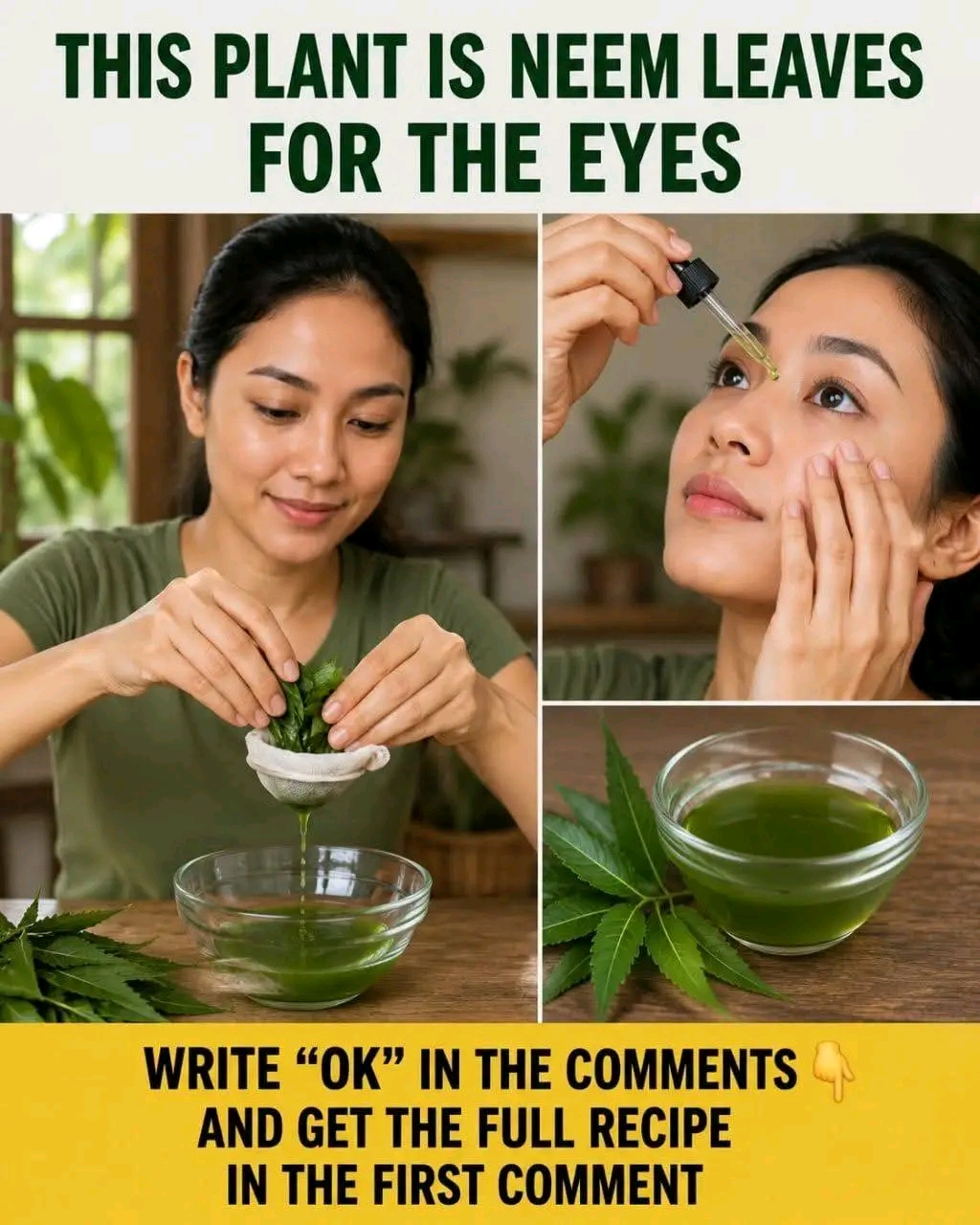
Important safety note: The image suggests putting homemade neem juice directly into the eyes. I do not recommend this. Neem preparations made at home are not sterile and can cause irritation, infection, corneal injury, or other eye problems. Do not use neem juice, neem oil, or herbal extracts as eye drops. For eye redness, dryness, infection, or vision problems, use an appropriate sterile eye product or consult an eye-care professional.
Introduction
Neem leaves have been used traditionally in South Asian herbal practices for generations. The leaves are commonly prepared as teas, rinses, or external herbal preparations.
This recipe creates a simple neem-leaf infusion for external use on the skin, rather than inside the eyes. It has a fresh herbal aroma and can be used as a gentle traditional skin rinse after it has completely cooled.
🌿 Ingredients
- 10–15 fresh neem leaves
- 2 cups (500 ml) clean water
- 1 small clean saucepan
- Fine strainer or clean cloth
- Clean glass container with a lid
Optional
- A few fresh mint leaves for a refreshing aroma
Instructions
- Wash the leaves
Rinse the neem leaves thoroughly under clean running water. - Prepare the water
Add 2 cups of water to a saucepan and bring it to a boil. - Add the neem leaves
Add the washed leaves and reduce the heat. - Simmer gently
Simmer for approximately 5–10 minutes. - Cool completely
Remove from the heat and allow the infusion to cool completely. - Strain
Strain through a clean fine strainer or cloth. - Store safely
Place the cooled preparation in a clean covered container and refrigerate. Because homemade herbal preparations can become contaminated, prepare small amounts and discard if the smell, appearance, or texture changes.
Preparation Method
The traditional method is essentially a water infusion/decoction: heat extracts some of the water-soluble compounds from the leaves. The resulting liquid can be used as an external skin rinse.
How to use it
Apply a small amount to clean skin with clean cotton or gauze. Keep it away from the eyes and do not apply it inside the eyelids or directly onto the eyeball.
If any irritation, burning, redness, swelling, or itching occurs, wash the area with clean water and stop using it.
History of Neem
Neem (Azadirachta indica) is a tree native to the Indian subcontinent and has a long history in traditional Ayurvedic practices. Different parts of the tree—including leaves, bark, seeds, and flowers—have traditionally been used in household and herbal preparations.
Neem became particularly valued because of its distinctive bitter compounds and its traditional use in personal care and plant protection.
Traditional Benefits
Neem leaves are traditionally associated with:
- 🌿 Herbal skin cleansing
- 🌿 A refreshing feeling on the skin
- 🌿 Traditional antimicrobial properties
- 🌿 Traditional use for oily or blemish-prone skin
- 🌿 A natural botanical alternative for external skin care
These are traditional uses, not proof that neem treats eye diseases or improves eyesight.
Formation & Appearance
A properly prepared neem infusion is usually:
- Green to yellow-green
- Lightly herbal in aroma
- Slightly bitter
- Thin and watery rather than oily
Its color may vary depending on the freshness and quantity of the leaves.
⚠️ What NOT to Do
Do not make homemade neem eye drops.
Do not put:
- Fresh neem juice directly into the eyes
- Neem oil into the eyes
- Homemade neem water into the eyes
- Unsterilized herbal preparations into the eyes
The eye requires sterile preparations. A homemade liquid cannot be assumed to be sterile simply because the leaves were washed or boiled.
Conclusion
Neem leaves have an interesting traditional history and can be incorporated into external herbal skin-care preparations. A simple cooled neem infusion can be prepared at home, but it should be kept strictly away from the eyes.
If the goal is to treat dry eyes, red eyes, an eye infection, blurry vision, or another eye problem, neem juice is not a safe substitute for proper eye care.