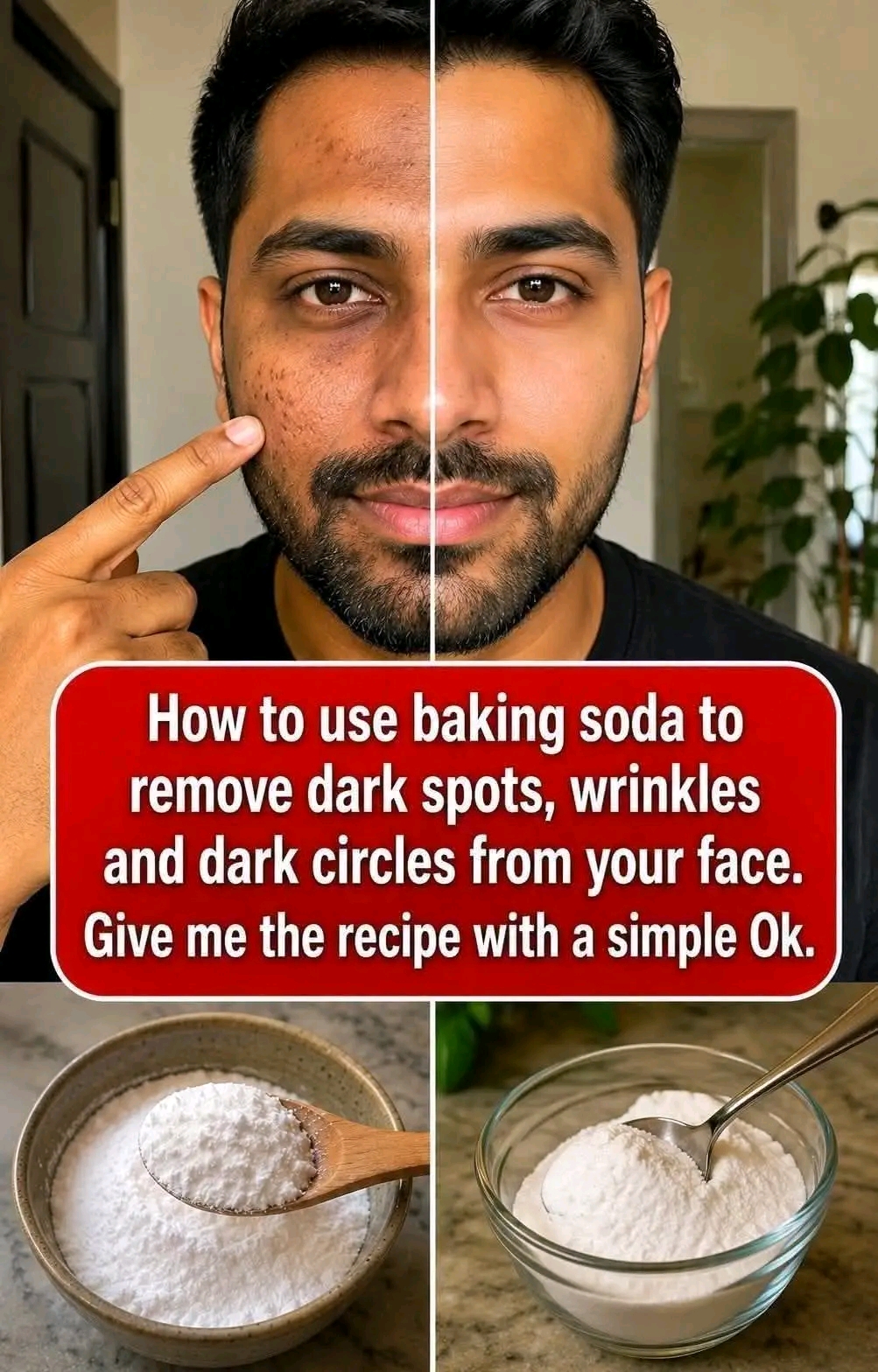
The image suggests using baking soda to remove dark spots, wrinkles, and dark circles. However, baking soda is not a proven treatment for these problems, and applying it directly to facial skin can cause irritation because it is alkaline and can disturb the skin’s natural protective barrier.
So rather than giving a recipe that could damage the skin, here is a safer skin-care recipe for gently caring for the face.
🌿 Introduction
Dark spots, uneven skin tone, rough texture, and tired-looking skin are common concerns. Many homemade recipes recommend baking soda because it feels cleansing and mildly abrasive. Unfortunately, that does not mean it is suitable for regular facial use.
Baking soda can cause dryness, burning, redness, itching, or worsening irritation—especially on sensitive skin. Irritation can also make pigmentation look darker.
A gentle routine is a better choice for maintaining healthy-looking skin.
🥣 Gentle Homemade Face Mask
Ingredients
- 1 tablespoon finely ground plain oats
- 1 tablespoon plain, unsweetened yogurt
- ½ teaspoon honey
- A few drops of water if needed
Do not add baking soda, lemon juice, toothpaste, or other harsh ingredients.
🥄 Preparation Method
- Place the oats in a clean bowl.
- Add the plain yogurt.
- Add the honey.
- Mix until you have a smooth, soft paste.
- If it is too thick, add a few drops of water.
🧖 How to Use It
- Wash your face with a gentle cleanser.
- Apply a thin layer of the mixture without rubbing aggressively.
- Keep it on for approximately 5–10 minutes.
- Rinse gently with lukewarm water.
- Pat your face dry rather than rubbing it.
- Apply a simple, fragrance-free moisturizer.
Use it once or twice a week at most if your skin tolerates it.
✨ Potential Benefits
Oats
Finely ground oats can provide gentle cleansing and soothing properties and are generally much less abrasive than baking soda.
Yogurt
Plain yogurt contains lactic acid, which can provide mild exfoliation. However, sensitive skin can still react, so patch testing is sensible.
Honey
Honey helps the mixture retain moisture and can leave the skin feeling softer.
⚠️ What About Baking Soda?
Baking soda should not be considered a wrinkle remover, dark-spot remover, or dark-circle treatment.
Avoid using it as:
- A facial scrub
- A daily cleanser
- An under-eye treatment
- A treatment for wrinkles
- A treatment for acne scars or pigmentation
The skin around the eyes is particularly delicate, so baking soda should not be applied there.
🌞 For Dark Spots
For persistent pigmentation, one of the most important steps is daily broad-spectrum sunscreen, ideally SPF 30 or higher. Sun exposure can maintain or worsen many types of dark spots.
For stubborn pigmentation, ingredients such as niacinamide, azelaic acid, or vitamin C may be more appropriate than homemade baking-soda treatments.
👁️ For Dark Circles
Dark circles can have many causes, including genetics, pigmentation, visible blood vessels, allergies, lack of sleep, and the natural shape of the eye area. A baking-soda mask cannot reliably eliminate them.
A gentle moisturizer, adequate sleep, sun protection, and avoiding rubbing the eyes are safer starting points.
🕰️ History of Baking Soda
Baking soda has been used for generations in household cleaning, cooking, deodorizing, and other practical applications. Because it has mild abrasive and alkaline properties, it has also become popular in homemade beauty recipes.
Popularity, however, is not the same as clinical evidence. A substance that works well for household cleaning does not necessarily belong on delicate facial skin.
❤️ Conclusion
The safest answer to the recipe shown in the image is: don’t use baking soda as a facial treatment. It has no reliable evidence that it removes wrinkles, dark circles, or dark spots, and it can irritate the skin.
For healthier-looking skin, choose a gentle cleanser, moisturizer, and daily sunscreen, and use proven ingredients when treating pigmentation or other specific concerns.