Introduction
Red onions are a common kitchen ingredient known for their distinctive flavor, beautiful purple-red color, and naturally occurring plant compounds. They are used in salads, soups, sauces, and countless traditional recipes around the world.
One simple preparation that has attracted attention on social media is red onion water. This homemade drink is prepared by soaking sliced red onions in drinking water for several hours, often overnight. Supporters of this traditional method believe that the water may offer wellness benefits because some compounds from the onion can move into the surrounding liquid.
However, an important distinction must be made: there is currently no reliable clinical evidence that soaking red onions overnight in water improves prostate health, treats an enlarged prostate, or prevents prostate cancer. Red onions can certainly be part of a balanced diet, but this drink should not be considered a medical treatment.
In this article, we will explore how to prepare red onion water, its nutritional background, potential benefits, traditional uses, safety precautions, and what men should know about maintaining prostate health.
Recipe Information
- Recipe name: Homemade Red Onion Water
- Preparation time: 5–10 minutes
- Soaking time: 6–8 hours in the refrigerator
- Total time: Approximately 6–8 hours
- Servings: 1–2 small servings
- Main ingredient: Fresh red onion
- Cooking method: No cooking required
- Difficulty level: Very easy
- Dietary suitability: Plant-based and naturally low in calories
- Best use: An occasional homemade infusion, rather than a medical remedy
Ingredients
You will need the following simple ingredients:
- 1 small, fresh red onion
- 1–2 cups (240–480 ml) of clean drinking water
- A clean glass jar or covered container
- A small knife and cutting board
- A fine strainer, if you prefer to remove the onion pieces
Optional ingredients
These additions are not necessary, but you may use them to change the flavor:
- A small slice of fresh lemon
- A few fresh mint leaves
- A small piece of fresh ginger
Avoid adding large amounts of sugar or honey if your goal is to keep the drink low in added sugar.
Instructions: How to Make Red Onion Water
Step 1: Choose a fresh red onion
Select a firm red onion with dry outer skin and no signs of mold, soft spots, or spoilage. Fresh ingredients and clean equipment are important when preparing any homemade infusion.
Step 2: Wash and peel the onion
Remove the dry outer skin. If the onion is visibly dirty, rinse it under clean running water before cutting it. Dry it with a clean paper towel.
Step 3: Slice the onion
Cut the onion into thin slices. Thinner slices expose more surface area to the water, allowing some water-soluble compounds and flavor components to move into the liquid.
There is no need to crush the onion or use a large quantity.
Step 4: Add the water
Place the onion slices in a clean glass jar. Pour in enough drinking water to cover them.
Use a covered container to protect the mixture from contamination.
Step 5: Refrigerate overnight
Place the covered jar in the refrigerator for approximately 6–8 hours.
Important: Do not leave the mixture soaking on the kitchen counter overnight. Refrigeration helps slow the growth of harmful microorganisms in prepared foods.
Step 6: Strain the liquid
The next morning, you may strain the mixture to remove the onion slices. You can also leave them in the water if you prefer.
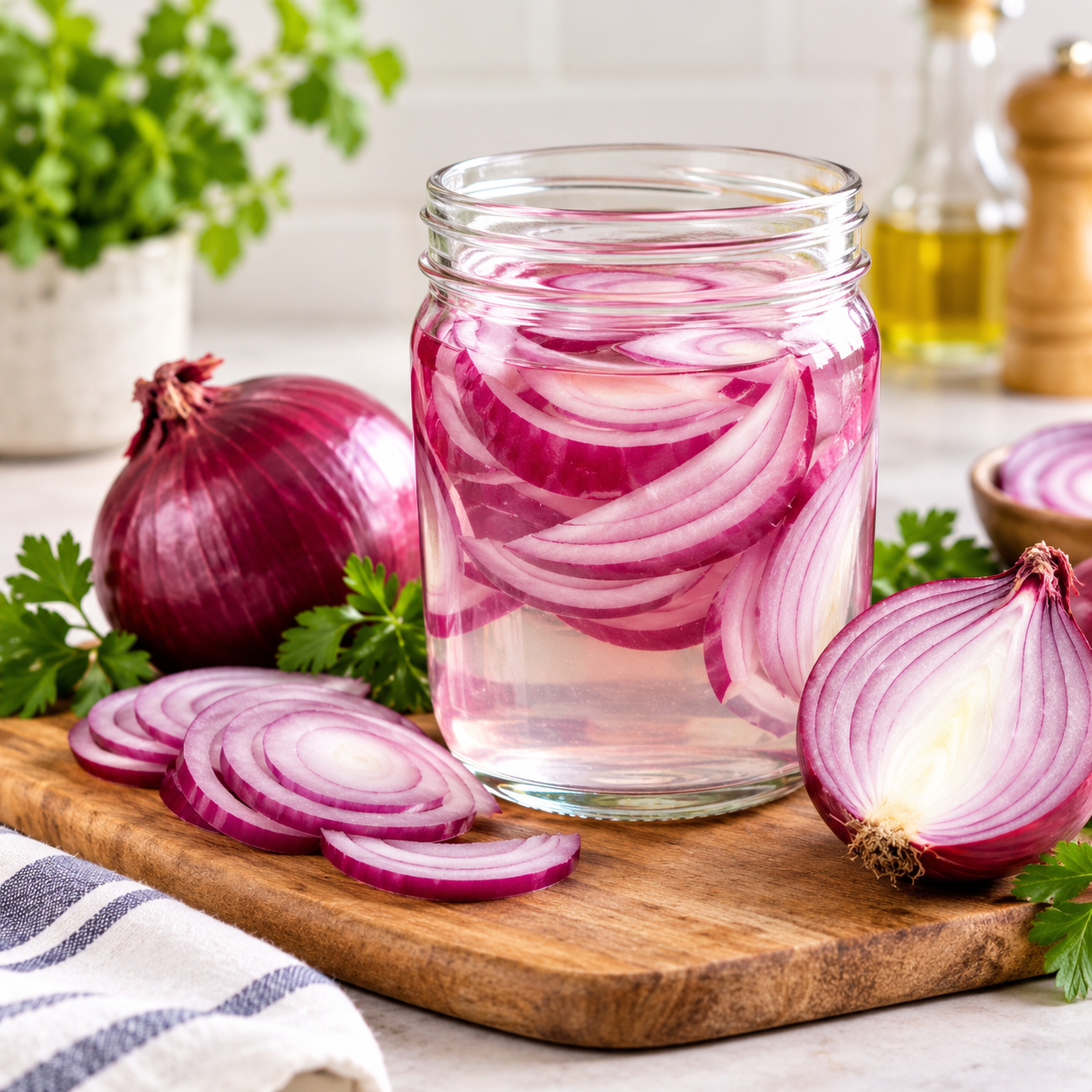
The liquid may have a mild onion flavor and a light pink or purple tint.
Step 7: Serve fresh
If you decide to try this drink, begin with a small serving to see whether you tolerate its flavor and whether it causes stomach discomfort.
There is no scientifically established therapeutic dose or recommended schedule for red onion water.
Preparation Methods
There are several simple ways to prepare red onion water at home.
Method 1: Overnight cold infusion
This is the method shown in the image.
- Slice one small red onion.
- Put the slices into a clean jar.
- Add 1–2 cups of drinking water.
- Cover and refrigerate for 6–8 hours.
- Strain and serve if desired.
This method requires no cooking and is easy to prepare ahead of time.
Method 2: Warm red onion infusion
For a warm preparation, place a few red onion slices in hot water and allow the mixture to cool to a comfortable temperature.
Do not assume that heating makes the drink more effective for prostate health. No established medical benefit has been demonstrated for this preparation.
Method 3: Red onion in everyday meals
For most people, eating red onion as part of ordinary meals is a more practical way to enjoy its nutrients and plant compounds.
Try adding fresh red onion to salads, vegetable dishes, bean soups, sandwiches, or homemade salsas. Cooking it with other vegetables can also help make it easier to eat regularly.
History and Traditional Uses of Red Onion
Onions have been cultivated for thousands of years and have played an important role in cuisines across many cultures. Their long storage life, strong flavor, and versatility have made them valuable ingredients in traditional cooking.
Different communities have also used onions in traditional household preparations, including infused water, broths, and herbal mixtures. These practices reflect generations of food traditions and the historical use of familiar kitchen ingredients.
Today, red onion water appears in online wellness discussions, where it is sometimes promoted for digestion, circulation, blood sugar management, or prostate health.
It is important to distinguish historical use from scientific evidence. A remedy can be popular in traditional practice without having been proven effective in clinical trials. In particular, red onion water has not been established as a treatment for prostate disorders.
Potential Benefits of Red Onion
Red onions contain several naturally occurring compounds that researchers have studied for their possible roles in human health.
1. Provides antioxidant compounds
Red onions contain flavonoids, including quercetin, as well as anthocyanins that contribute to their color.
These compounds have antioxidant activity in laboratory studies. Antioxidants can help protect cells from certain forms of oxidative damage, although the effects of eating a particular food depend on the overall diet and many other factors.
The amount of these compounds that enters homemade onion water is variable and has not been established as a therapeutic dose.
2. Can contribute to a balanced diet
Whole red onions provide small amounts of vitamins, minerals, and other plant compounds. They can add flavor to meals without requiring large amounts of salt or heavy sauces.
A varied diet containing vegetables, fruits, whole grains, legumes, nuts, and other nutritious foods is a more reliable approach to supporting general health than relying on a single homemade drink.
3. May support healthy eating habits
Preparing simple foods at home can encourage people to pay closer attention to their daily eating habits.
Red onions can be included in vegetable-rich meals that provide fiber and a variety of nutrients. Eating the onion itself provides more dietary fiber than drinking strained onion-infused water.
4. Contains naturally occurring sulfur compounds
Onions contain sulfur-containing compounds that contribute to their characteristic smell and taste. These compounds are of scientific interest because they can have biological effects under certain experimental conditions.
However, laboratory findings do not automatically demonstrate that drinking red onion water prevents or treats disease in people.
5. Adds flavor without much added sugar
Plain onion water does not require added sugar, syrup, or other sweeteners. This may make it an alternative to sugary drinks for someone who enjoys its flavor.
Nevertheless, ordinary drinking water remains the simplest everyday hydration choice, and there is no need to drink onion water to stay hydrated.
Red Onion Water and Prostate Health
The prostate is a small gland located below the bladder in people who have one. It surrounds part of the urethra, the tube that carries urine out of the body.
Prostate health becomes an increasingly important topic as men age. Several different conditions can affect the prostate, and they do not all have the same causes or treatments.
Can red onion water improve prostate health?
Red onions contain plant compounds that scientists study for their biological properties. However, there is insufficient clinical evidence to conclude that drinking red onion water improves prostate function or treats prostate disease.
In particular, there is no good evidence that this drink:
- Shrinks an enlarged prostate.
- Treats prostatitis or a prostate infection.
- Prevents prostate cancer.
- Relieves difficulty urinating.
- Replaces prescribed prostate medication.
A healthy diet may contribute to overall well-being, but no single food or drink can guarantee prostate protection.
Everyday habits that may support general health
Men who want to take care of their health can focus on sustainable habits such as:
- Eating a varied diet rich in vegetables, fruits, and whole grains.
- Exercising regularly according to their abilities.
- Maintaining a healthy weight.
- Limiting smoking and excessive alcohol consumption.
- Discussing urinary symptoms and prostate screening questions with a healthcare professional.
Screening decisions depend on factors such as age, family history, individual risk, and personal preferences. A healthcare professional can help explain the potential benefits and limitations of prostate-specific antigen (PSA) testing.
Important Information About Prostate Symptoms
Prostate-related symptoms should not automatically be attributed to aging or treated with home remedies.
Speak with a healthcare professional if you experience persistent symptoms such as:
- Frequent urination, especially at night.
- A weak or interrupted urine stream.
- Difficulty starting urination.
- A feeling that the bladder has not emptied completely.
- Persistent discomfort in the pelvic area.
Seek urgent medical care if you cannot urinate at all. Fever or chills accompanied by painful urination or pelvic pain also require prompt medical assessment.
Blood in the urine or semen should be medically evaluated.
Early assessment can help identify the cause of symptoms and ensure that appropriate treatment is not delayed.
Nutritional Information
The nutritional composition of red onion water depends on the amount of onion used, the soaking time, and how much of the onion is eaten.
Because the recipe has not been standardized, precise nutrition figures cannot be provided reliably.
| Nutritional component | General information |
|---|---|
| Calories | Likely low in a small serving |
| Carbohydrates | Some soluble compounds may enter the water |
| Dietary fiber | Very little if the onion is strained out |
| Vitamin and mineral content | Variable and not established for this preparation |
| Plant compounds | May include some compounds released by the onion |
| Added sugar | None if prepared without sweeteners |
Eating the onion itself generally provides more fiber than drinking the strained liquid.
Safety Precautions
Although red onions are ordinary foods, a homemade infusion should be prepared and stored safely.
Refrigerate the mixture
Keep the onion water covered in the refrigerator while it soaks. Do not leave cut onion sitting in water at room temperature overnight.
Prepare small quantities
Make only the amount you expect to use. For the simplest and safest approach, prepare a fresh batch each time and discard leftovers rather than storing the mixture for several days.
Consider digestive sensitivity
Onions contain fermentable carbohydrates that can cause gas, bloating, or abdominal discomfort in some people. The infused liquid may also bother people who are sensitive to onion.
Stop drinking it if you experience an unpleasant reaction.
Do not replace medical treatment
If you take medication for an enlarged prostate, diabetes, high blood pressure, or another condition, do not stop or adjust it because of a social media remedy.
Anyone with a diagnosed medical condition or concerns about interactions should discuss regular use of concentrated homemade preparations with a healthcare professional.
Remember that natural does not always mean effective
A food may contain beneficial nutrients without being a proven medicine. Red onion water should be treated as a food preparation, not as a cure for prostate disease or any other serious condition.
Serving Suggestions
If you enjoy the flavor, you can serve a small amount of freshly prepared red onion water on its own.
Alternatively, you may prefer using red onion in more familiar ways:
- Add thin slices to a fresh tomato and cucumber salad.
- Combine chopped red onion with parsley, lemon juice, and olive oil.
- Mix diced onion into a bean or lentil salad.
- Add onion to vegetable soup or a homemade vegetable stew.
- Use red onion as a topping for sandwiches or wraps.
These options allow you to enjoy the onion as part of a balanced eating pattern without relying on unsupported health claims.
Frequently Asked Questions
1. Is it necessary to soak red onions overnight?
No. Overnight soaking is simply one preparation method. There is no established evidence that soaking onions overnight creates a drink with special prostate benefits.
2. Can I drink red onion water every morning?
There is no scientifically established daily dose or schedule for this drink. It is not necessary for good health, and people who experience digestive discomfort should avoid it.
3. Does red onion water reduce prostate enlargement?
There is no reliable clinical evidence that it reduces an enlarged prostate. Persistent urinary symptoms should be assessed by a healthcare professional.
4. Can red onion water prevent prostate cancer?
No such preventive effect has been demonstrated. Eating a varied diet is beneficial for general health, but no single drink can guarantee cancer prevention.
5. Is eating red onion better than drinking the water?
Eating the onion generally provides more fiber and allows you to consume the whole food. Both can fit into ordinary meals, but neither should be presented as a treatment for prostate disease.
6. Can I add lemon or ginger?
You can add small amounts for flavor if you tolerate them. These additions do not establish a prostate-health benefit.
7. How should I store leftover onion water?
Keep it refrigerated in a clean, covered container and make small batches intended for immediate use. Discard any mixture that has been left at room temperature for an extended period or shows signs of spoilage.
Conclusion
Red onion water is a simple homemade infusion that requires only fresh red onion, drinking water, and a clean container. Its preparation is straightforward, and red onions themselves contain flavonoids, anthocyanins, and other naturally occurring plant compounds.
However, the claim that soaking red onions overnight produces a drink that improves prostate health is not supported by reliable clinical evidence. The drink should not be used to treat an enlarged prostate, urinary symptoms, prostatitis, or prostate cancer.
For long-term well-being, focus on a varied diet, regular physical activity, appropriate medical checkups, and prompt evaluation of persistent or concerning symptoms.
The most important lesson: Enjoy red onions as part of a balanced diet, but do not rely on red onion water as a substitute for evidence-based medical care.
A Final Note for Readers
Have you ever tried soaking red onions in water, or do you prefer eating them fresh in salads and other dishes? Share your cooking experience in the comments.
If you found this article helpful, consider sharing it with friends and family. When discussing health remedies online, remember to share accurate information and avoid promising medical results that have not been demonstrated by scientific research.