Introduction
Have you ever wanted to end your day with a warm, comforting drink that helps you relax and enjoy a peaceful evening? A simple cup of homemade herbal tea can be a wonderful addition to your nighttime routine.
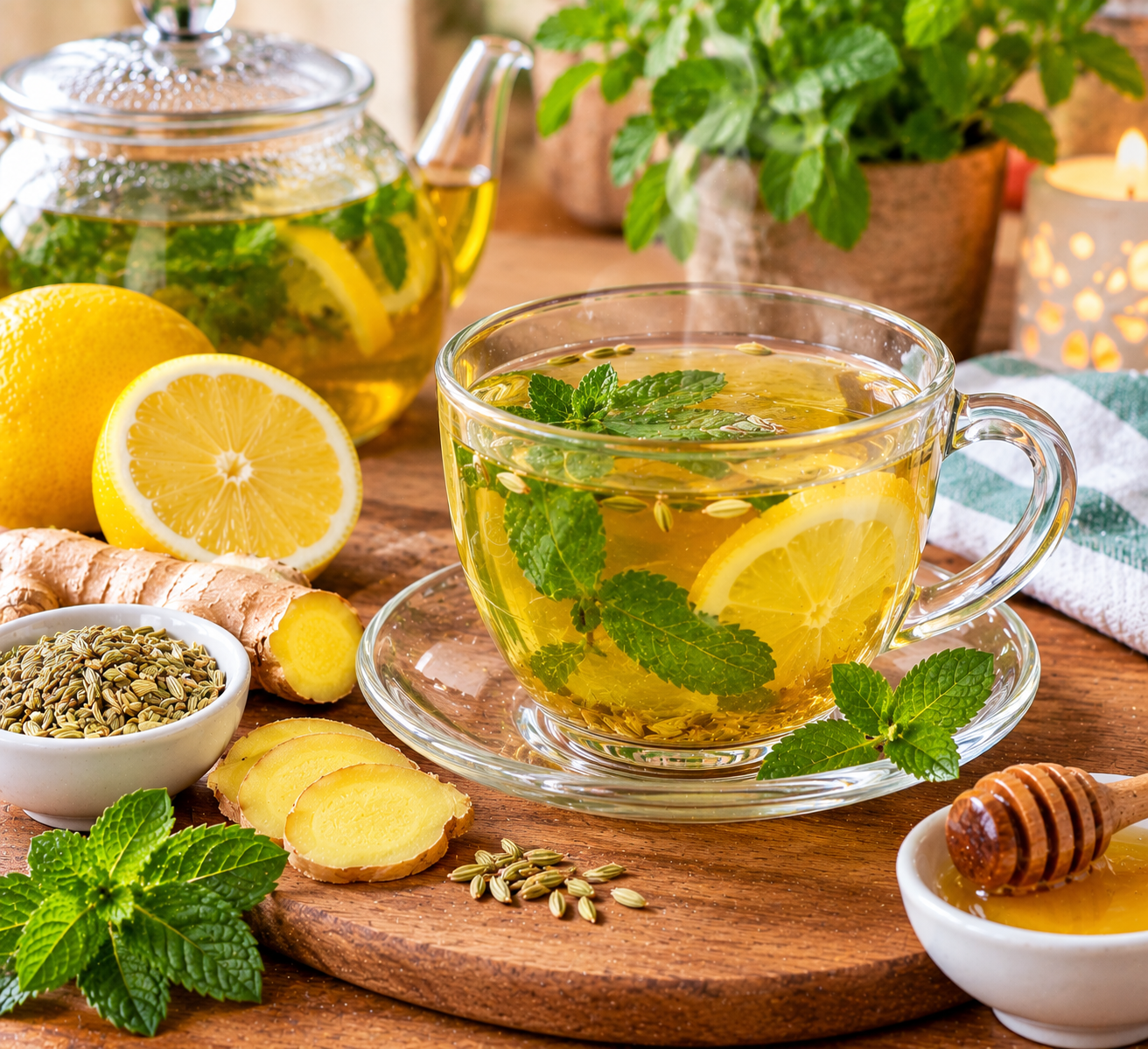
This easy herbal tea combines fresh ginger, mint leaves, lemon, and a small amount of fennel seeds to create a refreshing drink with a naturally soothing aroma. It is simple to prepare, requires only a few everyday ingredients, and can be enjoyed warm after dinner.
Unlike exaggerated claims you may see online, no single cup of tea can magically melt belly fat, remove years of waste from the intestines, or transform your body overnight. However, staying hydrated, eating enough fiber, exercising regularly, and following healthy habits can support normal digestion and overall well-being.
If you love natural drinks and simple homemade recipes, this herbal tea is worth trying as part of a balanced lifestyle.
Ingredients
Here is everything you need to prepare one comforting cup of homemade herbal tea.
- 1 cup (240 ml) water
- 3–4 thin slices of fresh ginger
- 5–6 fresh mint leaves
- 1/2 teaspoon fennel seeds
- 1 teaspoon fresh lemon juice
- 1 teaspoon honey (optional)
- 1 small lemon slice for garnish (optional)
Ingredient notes:
Fresh ginger: Adds a warm, slightly spicy flavor and contains natural compounds that have been studied for their role in digestive comfort.
Fresh mint: Gives the tea a refreshing taste and pleasant aroma. Mint may help some people with digestive discomfort, although it can worsen acid reflux in others.
Fennel seeds: Provide a gentle, sweet, licorice-like flavor. Fennel is traditionally used in herbal preparations for digestive complaints, but evidence for its effectiveness is limited.
Lemon juice: Adds freshness and a light citrus flavor.
Honey: Provides optional sweetness. You can leave it out if you prefer an unsweetened drink.
Instructions
Follow these simple steps to prepare your homemade herbal tea.
- Prepare the ingredients. Wash the mint leaves and ginger thoroughly. Slice the ginger into thin pieces to help release its flavor.
- Heat the water. Pour one cup of water into a small saucepan and bring it to a gentle boil.
- Add the ginger and fennel. Place the ginger slices and fennel seeds into the hot water.
- Simmer gently. Allow the mixture to simmer for approximately 5 minutes.
- Add the mint. Remove the saucepan from the heat, add the mint leaves, and cover it for another 5 minutes.
- Strain the tea. Pour the liquid through a fine strainer into your favorite cup.
- Add lemon juice. Stir in the fresh lemon juice after the tea has cooled slightly.
- Sweeten if desired. Add a small amount of honey if you prefer a sweeter taste.
- Serve warm. Enjoy your homemade herbal tea slowly as part of a relaxing evening routine.
Preparation Method
Preparation time: 5 minutes
Steeping and cooking time: 10 minutes
Total time: Approximately 15 minutes
Servings: 1 cup
Difficulty: Easy
Best time to enjoy: In the evening, after dinner or before beginning your bedtime routine.
For a milder flavor, reduce the amount of ginger. If you prefer a stronger herbal taste, allow the mint and fennel to steep for a few extra minutes.
There is no need to drink this tea piping hot. Let it cool to a comfortable temperature before drinking.
The History of Herbal Tea
Herbal infusions have been enjoyed in many cultures for centuries. Before modern packaged beverages became widely available, people commonly prepared drinks from leaves, roots, flowers, seeds, and aromatic plants.
Ginger has a long history in Asian culinary traditions, while mint has been used in food and herbal preparations across the Mediterranean and other regions. Fennel has also been valued as both a cooking ingredient and a traditional herbal plant.
These ingredients eventually became popular in homemade drinks because they are easy to find, simple to prepare, and naturally flavorful.
Today, herbal teas remain a popular choice for people who want a warm, caffeine-free beverage in the evening. Although traditional uses provide interesting historical context, they do not prove that every herbal remedy works for every health condition.
Potential Benefits of This Herbal Tea
1. Supports Daily Hydration
Water makes up the main ingredient in this recipe. Drinking enough fluids throughout the day helps the body perform essential functions and can support normal bowel movements.
If you find plain water boring, a flavorful herbal infusion may make hydration more enjoyable.
2. May Help With Digestive Comfort
Ginger has been studied for certain types of nausea, and some people find ginger-based drinks comforting after meals.
However, results depend on the individual, and this homemade tea should not be considered a treatment for persistent abdominal pain, bloating, or other digestive disorders.
3. Provides a Refreshing Herbal Flavor
Mint contributes a cool, fresh aroma, while fennel seeds add a subtle sweetness. Together, these ingredients create a pleasant drink without requiring large amounts of sugar.
4. Can Become Part of a Relaxing Evening Routine
Preparing a warm cup of tea can encourage you to slow down at the end of a busy day. Pairing it with dim lighting, less screen time, and a consistent bedtime may help you establish a calming nighttime routine.
The relaxing routine itself may be beneficial, even though the tea is not a sleep medicine.
5. Offers an Alternative to Sugary Drinks
When prepared without honey or added sugar, this tea is naturally very low in calories. Choosing it instead of a sugar-sweetened beverage may help reduce your overall added-sugar intake.
6. May Support Healthy Habits
Small, consistent choices can contribute to overall well-being. Drinking unsweetened tea, eating a balanced diet, getting regular movement, and sleeping adequately are more useful long-term strategies than relying on a single supposed detox drink.
Can This Tea Melt Belly Fat or Clean the Colon?
It is important to understand what this recipe can and cannot do.
It cannot directly melt belly fat. No herbal tea selectively burns fat around the stomach. Reducing excess body fat generally requires sustainable dietary habits, regular physical activity, and other individualized lifestyle changes.
It does not detoxify the colon. Your digestive system already moves waste through the intestines, while the liver and kidneys perform important roles in processing and eliminating waste products. A homemade tea does not flush out years of accumulated toxins.
It may contribute to hydration. The water in the tea helps supply fluid, which is important for normal bodily functions.
It may be a comforting drink after dinner. Some people enjoy ginger or mint infusions as part of their digestive routine, but individual responses vary.
If you regularly experience constipation, persistent bloating, blood in your stool, unexplained weight loss, or ongoing abdominal pain, consult a qualified healthcare professional rather than relying on herbal drinks.
Nutrition Information
The approximate nutritional values for one cup prepared without honey are:
- Calories: 2–8
- Protein: Less than 1 gram
- Fat: Less than 1 gram
- Carbohydrates: Approximately 1–2 grams
- Added sugar: 0 grams
- Caffeine: 0 milligrams, assuming no caffeinated ingredients are added
These values are estimates and vary according to the amount of ginger, lemon, and other ingredients used. Adding honey increases the calorie and sugar content.
Helpful Tips for the Best Results
- Use fresh, clean ingredients for a brighter flavor.
- Avoid boiling the mint leaves for too long, as this can affect their delicate aroma.
- Strain the tea before drinking if you do not want fennel seeds or ginger pieces in your cup.
- Skip the honey if you prefer an unsweetened beverage.
- Drink it at a comfortable temperature.
- Remember that drinking more tea does not necessarily provide greater benefits.
- Combine healthy drinks with balanced meals, fiber-rich foods, and regular physical activity.
If you experience frequent heartburn or acid reflux, be aware that mint and lemon can trigger symptoms in some people.
People who are pregnant, take regular medication, or have a medical condition should ask a healthcare professional before using concentrated herbal preparations regularly.
Frequently Asked Questions
1. Can I drink this tea every night?
Many adults can enjoy a mild herbal infusion as part of their routine, but individual tolerance varies. Start with a modest serving and seek professional advice if you have a medical condition or take medication.
2. Should I drink it before or after dinner?
You can enjoy it after dinner or during your evening routine. There is no scientifically established ideal time for this particular combination.
3. Can I prepare the tea without honey?
Yes. Honey is optional, and the drink tastes refreshing without it.
4. Will it make me lose weight overnight?
No. Any quick change in body weight is not the same as losing body fat. Sustainable weight management depends on your overall habits over time.
5. Can I use dried mint instead of fresh mint?
Yes. Use approximately 1 teaspoon of dried mint in place of the fresh leaves, adjusting the amount to your taste.
6. Can I prepare a larger batch?
Yes. Multiply the ingredients as needed. Refrigerate the prepared tea promptly in a clean, covered container and use it within about 24–48 hours. Reheat gently if you prefer it warm.
Conclusion
A cup of homemade ginger, mint, lemon, and fennel tea is a simple way to enjoy a flavorful, caffeine-free beverage at the end of the day. It requires only a few ingredients, takes about 15 minutes to prepare, and can easily become part of a relaxing evening routine.
Although it is not a miracle weight-loss drink or a colon cleanser, it can help you enjoy more fluids and replace sugary beverages when prepared without added sweeteners.
The real secret to feeling your best is not a magical nighttime remedy. It is the combination of small, healthy habits that you can maintain consistently.
Prepare a cup, sit back, relax, and enjoy every sip!
For Herbal Tea Lovers ❤️
If you love simple homemade drinks made with natural ingredients, this soothing herbal tea is a lovely recipe to add to your collection.
Have you ever tried ginger and mint tea before bedtime?
Comment “YES” if you enjoy homemade herbal drinks, and share this recipe with a friend who loves easy kitchen recipes.
Save this recipe so you can prepare it whenever you want a warm, refreshing evening drink.
Thank you for supporting and sharing these simple homemade recipes. Happy sipping!