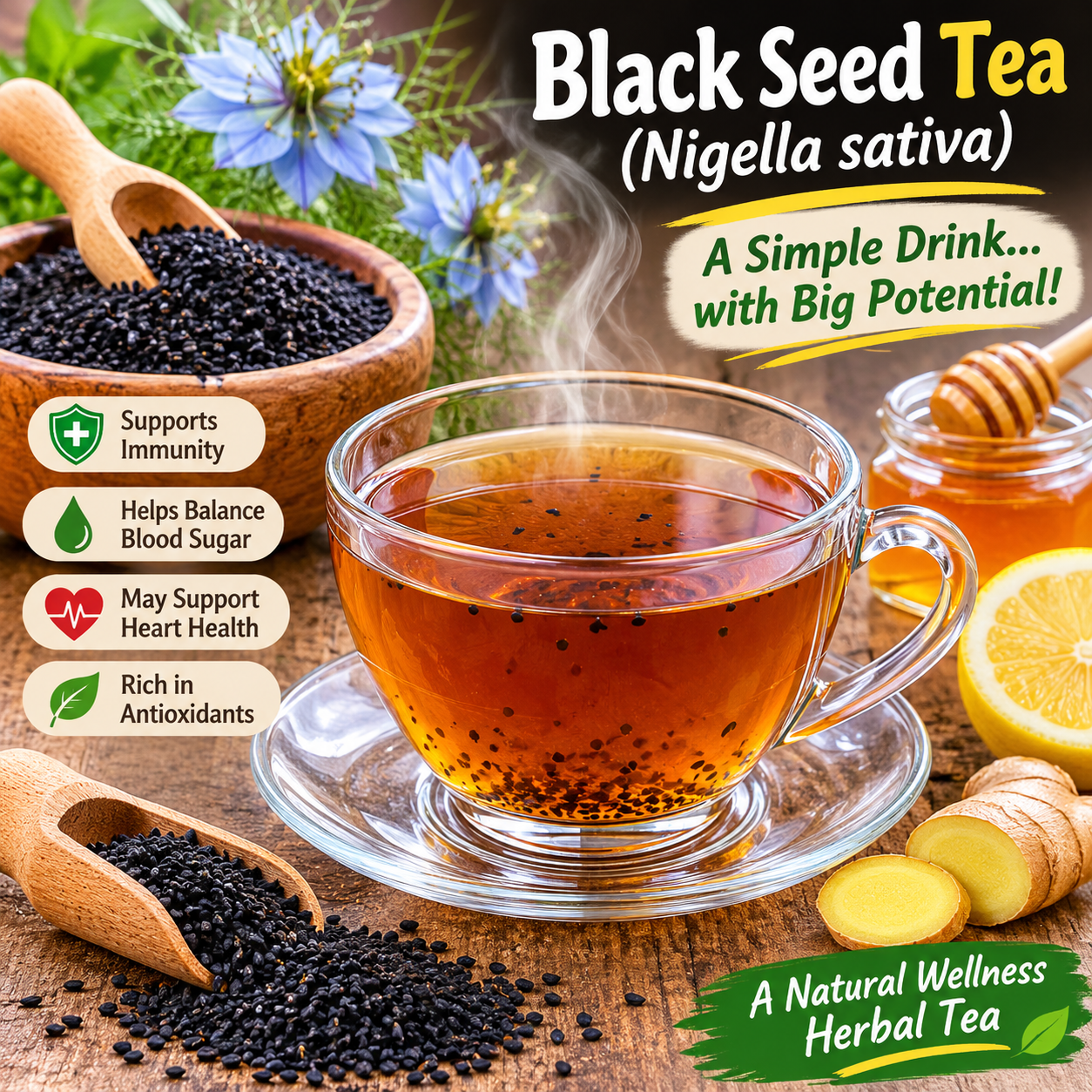
A reality check first: the image’s claim that this seed “cures 200 diseases” is false. Black seed has promising research behind it, but it is not a cure for anything. It’s a healthy daily habit, not a replacement for medical treatment.
Introduction
Black seed, also called black cumin, kalonji, or habbat al-barakah, is a small black seed from a flowering plant native to Southwest Asia and the Mediterranean. It has a peppery, slightly bitter, oregano-like flavor. The drink in your image is a simple infusion of the seeds.
Ingredients (1 serving)
- 1 tsp black seeds (about 2-3 g), whole or lightly crushed
- 1 cup (250 ml) water
- 1 tsp honey (optional)
- A squeeze of lemon (optional)
- A slice of fresh ginger or a cinnamon stick (optional)
Instructions
- Lightly crush the seeds in a mortar to release their oils.
- Bring the water to a boil, then lower the heat.
- Add the seeds (and ginger or cinnamon) and simmer gently for 5-10 minutes.
- Strain into a glass.
- Let it cool slightly, then stir in honey and lemon. Adding them while it’s too hot damages some of their qualities and burns the mouth.
Other Methods
- Cold infusion: soak the seeds in water overnight, strain, and drink.
- Honey paste: grind the seeds and mix 1 tsp with 1 tbsp honey.
- Smoothie or yogurt: stir ½ tsp ground seeds into either one.
- Cooking: sprinkle on bread, salads, or curries.
- Oil: cold-pressed black seed oil, ½ to 1 tsp, if you prefer.
History
Black seeds were found in Tutankhamun’s tomb, and the plant appears in ancient Greek and Roman medical writings. In Islamic tradition, a saying of the Prophet describes it as a remedy for every illness except death. That saying is the likely source of the “cures everything” reputation. It has been used for centuries in Ayurveda, Unani, and traditional Arab and North African medicine.
Composition
The seeds contain:
- Thymoquinone, the main active compound, which is antioxidant and anti-inflammatory
- Healthy fats, mainly linoleic and oleic acids
- Protein, fiber, and small amounts of iron, calcium, and zinc
- Plant compounds such as flavonoids and alkaloids
Evidence-Based Benefits
Studies are mostly small, so results are modest and not conclusive:
- May slightly lower fasting blood sugar and HbA1c
- May modestly lower blood pressure and cholesterol
- May reduce inflammation and help with mild asthma or allergy symptoms
- May support digestion
Who Should Take Care
- Avoid or ask a doctor first if you are: pregnant, breastfeeding, taking blood thinners, taking diabetes or blood pressure medication, awaiting surgery, or have an allergy to the seeds.
- Stick to 1-2 g a day, since higher amounts can cause stomach upset.
- Never stop prescribed medication because of a home remedy.
Who Loves It
- People who enjoy herbal teas and traditional wellness routines
- Cooks who like peppery, earthy spices
- Anyone looking for a simple, low-cost daily ritual
Conclusion
Black seed tea is easy to make, inexpensive, and may offer small health benefits when used alongside a balanced diet, exercise, and proper medical care. Enjoy it for what it is, and be wary of any post that promises it will cure hundreds of diseases.
I wasn’t sure what you meant by “formation” and “lovers,” so I read them as composition and who enjoys it. Tell me if you meant something else and I’ll adjust.